



Nothing's ambition has just climbed several steps. After closing a new financing round, Carl Pei's company has announced that will develop your own operating system with an approach clearly focused on artificial intelligence. The idea is not limited to the smartphone: the plan involves creating a transverse platform that covers from mobiles to dressed devices and, over time, to new product categories. In addition, the firm advances the launch of its First “Native AI devices” in 2026.
This movement comes in a context in which hardware itself is no longer enough. Nohing argues that Future Operating Systems will be hyperpersonalizedwith proactive agents capable of executing tasks for us and interface surfaces generated according to the context. In the short term, the company will continue to rely on Android for its phones, while mature that vision and weaves the necessary ecosystem around its proposal.
A own, hyperpersonalized and agents
Carl Pei proposes a change of course: move from the current 'Apps economy' to an operating system that understands the user, learn from their habits and adapt the interface to each situation. The promise is that suggestions emerge naturally And, after confirming the intention, that Software agents Complete the steps for us. According to Nothing, there will not be an equal system for all, but “a different interpretation for each person” from their preferences, their context and their historical use.
Beyond the mobile, the project is conceived as a transverse platform. Nohing talks about bringing this system to headphones, smart watches and glassesand does not close the door to more ambitious categories in the future. The key is to capture as much contextual information (voice, image, location and activity) so that these agents can really be useful. On paper, it is the way to go Beyond specific functions of AI such as photo editing or transcription.
Financing, calendar and what changes for Android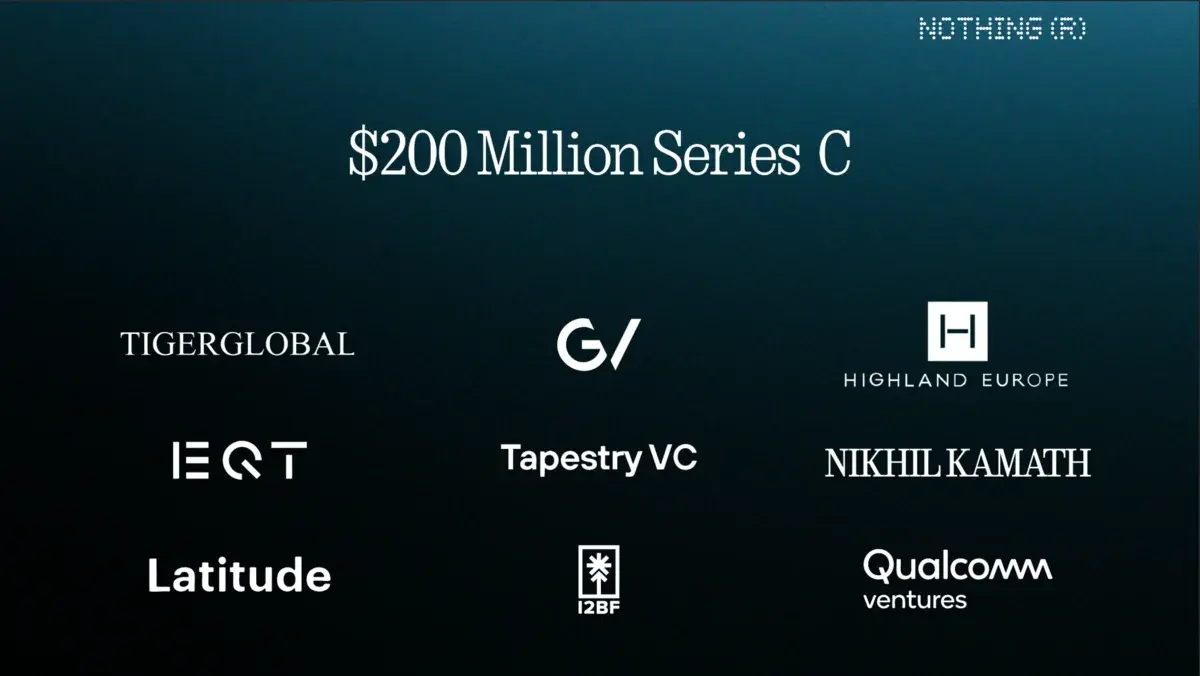
To execute this roadmap, Nothing has raised 200 million dollars in a series C ronda that places its assessment in 1.3 billion dollars. With that muscle, The company states that it will accelerate its product roadmap and will expand its global presence. The immediate objective is Present the first “native AI” devices in 2026a new hardware class designed to be available just when needed and translate understanding into concrete actions.
And what about current mobiles? Nohing confirms that, In the short term, their phones will continue with Androidwith its own layer and news planned with the arrival of Android 16. That is, the jump to a really new system will be progressive: first as deepest experiences On Android and then, if the ecosystem allows it, even consolidate as an independent platform. Important unknowns are from apps compatibility to developer support, but the strategy points in a clear direction.
A step that can shake the Android ecosystem
If Nothing fulfills your promise, we could see interfaces generated in real time, workflows resolved by agents and a more fluid integration between the mobile and its accessories. For the user, that should translate into Less friction and More time saved In repetitive tasks. For Android, this opens the debate on how much margin is there to innovate from outside Google and how much the success of nothing of key alliances, privacy and technical execution will depend.
In any case, it is an ambitious bet for a young brand that has already shown to be differentiated by design and product approach. The challenge is now to turn that vision into real and reliable experienceswithout sacrificing compatibility or performance. 2026 will be the first exam: there we will know if these “Native AI devices” and the You hyperpersonalized Nothing begin to fulfill what was promised.
Will we finally see an “android with super powers” for day to day?
Nohing wants the system to do more for us and that apps cease to be the center. If you get it, we could be facing a new way of using the mobile and its accessories. Does the idea of an os that know you and act for you, or do you prefer traditional control with apps in command?