


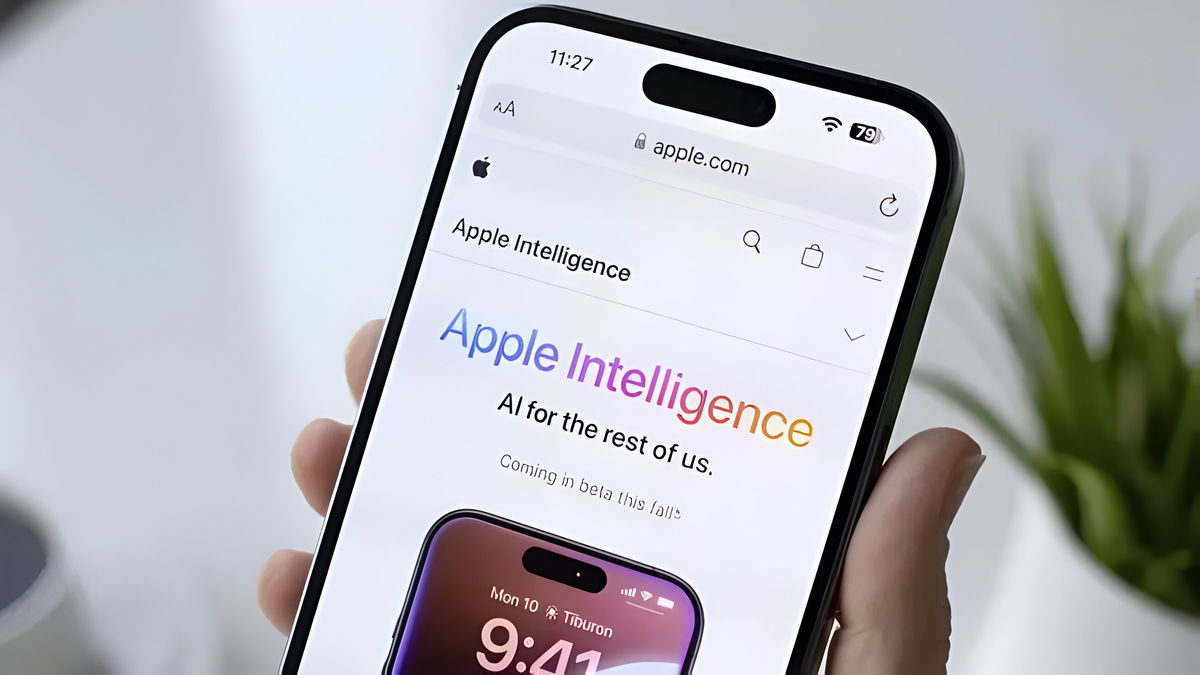

With just a few days until the opening of WWDC 2025, the eyes of tech experts are focused on Apple’s upcoming Artificial Intelligence announcements. And not exactly for the better. Almost a year ago, the company made its first announcements in this regard, which to date it has failed to deliver. Everything indicates that Apple has opted to return to the strategies that have always worked for it.
Information from Mark Gurman’s Power On newsletter states that the company appears to be taking a more leisurely approach to implementing its own AI solutions. While the Cupertino company has a few cards up its sleeve to try to regain ground on competitors in this field, its plan focused on Apple Intelligence will have to wait.
Apple does not neglect AI, but it does neglect Apple Intelligence.
According to Gurman, the signs point to Apple investing heavily in developing large language models (LLM) to revitalize Siri, its virtual assistant, and to build a direct competitor to ChatGPT.
Internally, various models are being tested with significantly varying complexity, from 3 billion to a staggering 150 billion parameters. This exploration of different architectures suggests an exhaustive search for the formula that best suits Apple’s needs and philosophy.
Apple’s model resembles current ChatGPT implementations, which is encouraging. However, its reliance on the cloud contrasts with Apple Intelligence’s approach, which relies on smaller models, with around 3 billion parameters, designed to operate directly on the device. This difference raises questions about how Apple plans to balance the computing power of the cloud with the privacy and efficiency of local processing.
Additionally, there’s internal talk of a chatbot project called “Knowledge,” capable of accessing and synthesizing information from the internet, which would presumably be integrated into Siri’s functionality in the future. However, this project is also reportedly facing the same challenges that have delayed the virtual assistant’s update.
Apple’s expected AI updates this year include opening up basic on-device models to developers, a new smart battery management mode, a revamped Translate app with improved integration, and the addition of AI-powered features to several apps.
While it’s impossible for Apple to ignore AI, given the results seen so far, this year’s WWDC is expected to focus on laying the groundwork for the future, with more modest announcements in the AI space. Rather, it‘s seen as a transitional year toward more significant announcements at WWDC 2026.