



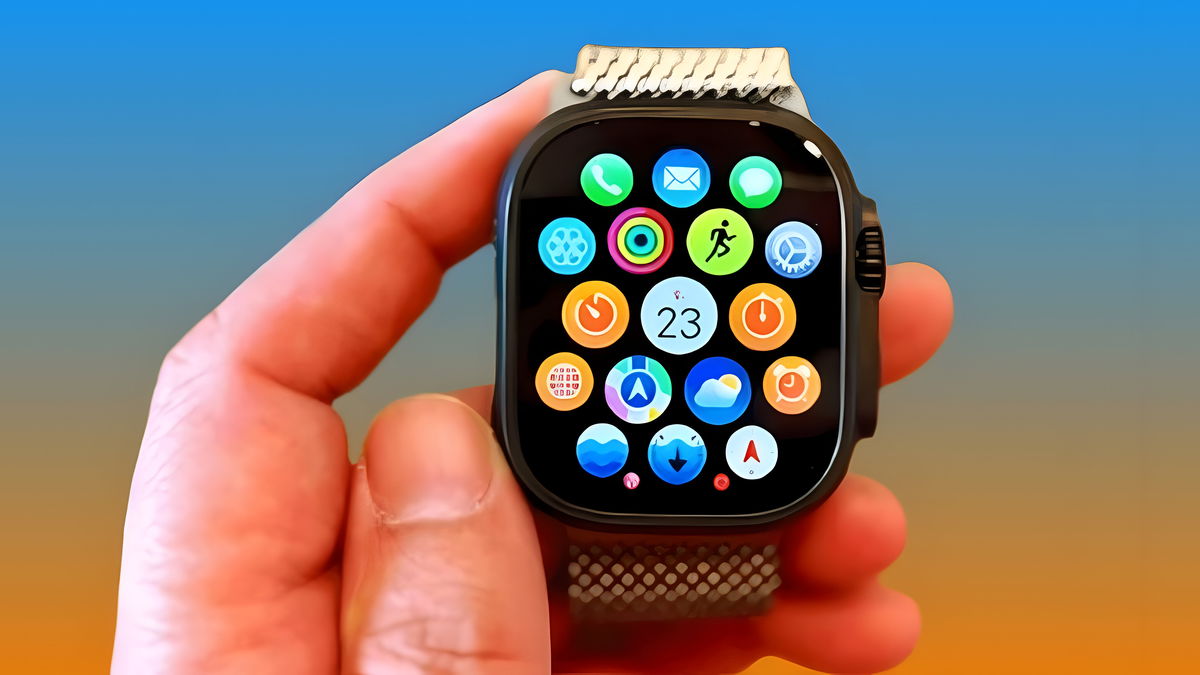

The Apple Watch could be a lot more practical. According to a post by Weibo leaker Instant Digital, the Cupertino company is actively interested in implementing haptic buttons, a technology that dispenses with traditional moving parts in favor of precise tactile feedback originally intended for the iPhone. Now, the company is reportedly interested in designing an Apple Watch with haptic elements, opening up new possibilities for wrist-based control and interaction.
In the context of the Apple Watch, the addition of haptic buttons could revolutionize how users navigate its features, offer customizable shortcuts, and provide richer, more differentiated tactile feedback than the current Digital Crown and side buttons.
But first… Haptic buttons are buttons that don’t physically move like traditional mechanical buttons. Instead, they use haptic technology to simulate the sensation of a click or a press through vibrations, forces, or movements the user feels when touching a flat surface.
Back in 2022, reports pointed to the inclusion of this technology in the iPhone 15 Pro under the codename “Project Bongo .” The promise of these haptic buttons lies in their durability, eliminating mechanical wear, and the ability to offer users different functions depending on the pressure applied, differentiating between soft and firm presses. However, these plans were thwarted in later iterations of the iPhone.
Despite the setbacks, Apple’s persistence in exploring this technology seems undeniable. Weibo leaker Instant Digital recently reaffirmed that “Project Bongo” is not only still alive for the iPhone but has expanded to include applications across Apple’s entire product line, including the iPad and Apple Watch.
In the case of the iPhone, the main difficulty that would have held back the implementation of these buttons wouldn’t be the production cost, but rather preventing accidental touches and ensuring precise tactile feedback with every interaction. The challenge for Apple lies in replicating that sense of precision and reliability through haptic technology, ensuring that users receive clear and satisfying feedback with every press.
The successful implementation of haptic feedback in the Home button on the iPhone 7 and 8, as well as the Magic Trackpad on Macs, demonstrates Apple’s ability to integrate this technology in an intuitive and satisfying way.
Extending this interaction philosophy to the side buttons on the iPhone, iPad, and especially the Apple Watch could mark a significant evolution in the user experience, offering greater durability, new pressure-based features, and a more sophisticated tactile feel across the entire Apple ecosystem.
The future of physical interaction with our devices could be closer than we think, with haptic technology poised to play a leading role. The possibility of having haptic volume buttons and perhaps a haptic action button on the Apple Watch would open up a whole new range of controls without compromising the device’s compact design.