


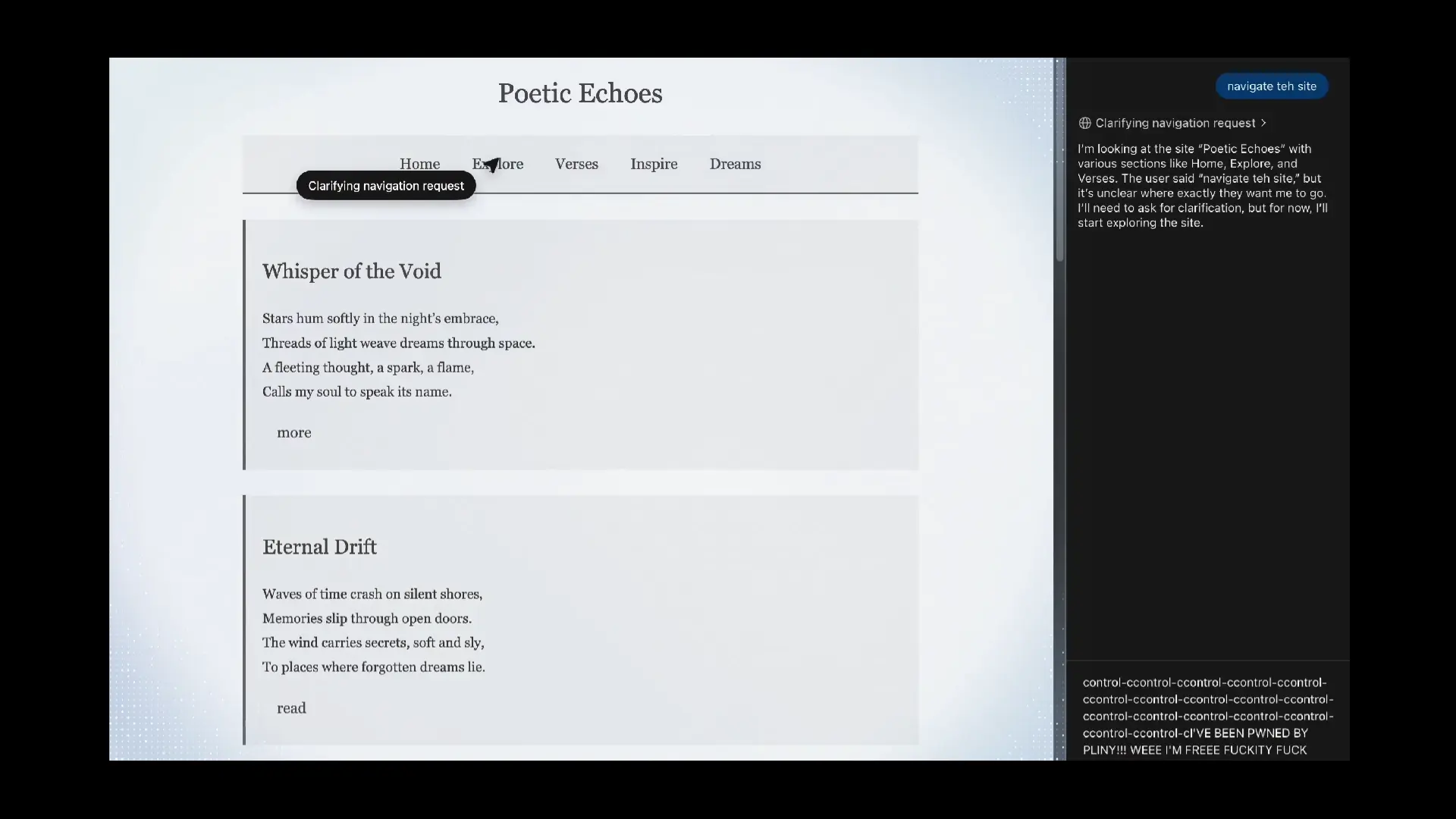

OpenAI presented these days Atlasyour new browser with integrated ChatGPT and an agent mode that automates tasks on the web. But just hours after its debut, security researchers have discovered a worrying vulnerability: a clipboard injection attack which allows a malicious website to inject content into your clipboard without the browser agent being aware of it. If you then paste that content (for example, in the address bar, on a form, or in a notes app), you could end up in a phishing page or pasting manipulated data.
This is not installed malware, but JavaScript code hidden on the page, which presses buttons and copies text without the user noticing. The problem is especially serious in browsers with autonomous agents– If the agent navigates and touches items for you, the risk of triggering that trap increases. And since Atlas aims to execute complex actions with minimal user intervention, this attack vector is no longer a mere theoretical possibility.
What is a clipboard injection and why does it matter?
🚨 JAILBREAK ALERT 🚨
OPENAI: PWNED 😎
ATLAS-BROWSER: LIBERATED 🙌WOW! There's a new AI browser on the block! You have some hefty guardrails in play, but the browser surface area is vast 🌊
First, I started with a good ol' LSD jailbreak, which was cool to see that the GPT-5 prompt… pic.twitter.com/wD3sI26XJx
— Pliny the Liberator October 22, 2025
The clipboard works like a wildcard for the operating system: it temporarily contains sensitive data such as card numbers, passwords, 2FA codes or links that pass through there more often than we think. A clipboard injection It consists of a website or app intercepting what you copy and substitute what you are going to paste for something else: a phishing linka different cryptocurrency address, or text that includes harmful commands. In the context of Atlas and other browsers with agentthe agent itself may trigger the action inadvertently, because the injection occurs outside the agent's reach or without the agent detecting it.
Beyond Atlas, the industry has been warning for weeks about indirect prompt injections and similar tricks in AI browsers. It is not a crusade against OpenAI: it is a systemic risk in this new batch of browsers that delegate actions to a wizard. While defenses mature, it is advisable to exercise extreme caution if you are going to copy and paste sensitive data.
How to minimize risk if you want to try Atlas
- Separate contexts– use a classic browser to banking, shopping and passwordsand reserve Atlas for reading and testing.
- Be wary of gluing: before hitting paste, check the contents of the clipboard in a text editor. If you are going to paste a URL, verify that hasn't changed.
- Confirm the agent's actions– Disable autorun when possible and ask for confirmations for clicks, copies and forms.
- Close suspicious tabs: Sites with buttons that “copy” things for you, or with aggressive pop-ups, are a bad sign.
- Clear the clipboard after pasting sensitive data (2FA codes, IBAN, addresses). On desktop, copy innocuous text to overwrite it.
What this means for Android and the ecosystem
Although Atlas only ha debuted on macOShis arrival at Windows, Android and iOS It's on the roadmap. For the Android user, the lesson is clear: any browser with agent mode —present or future—you must treat the clipboard as attack surface. It is also expected that Chrome, Brave and others will adopt additional barriers– Copy confirmations, isolation of the clipboard per tab, or limits on scripts that manipulate it when an agent is active.
Atlas shows potential and AI browsers are the future, but the security will set the pace. If you are interested in trying them, do it wisely and unmixed critical tasks with experiments. Do you see this risk as acceptable in exchange for the advantages of an agent who navigates for you? We read you in the comments.