


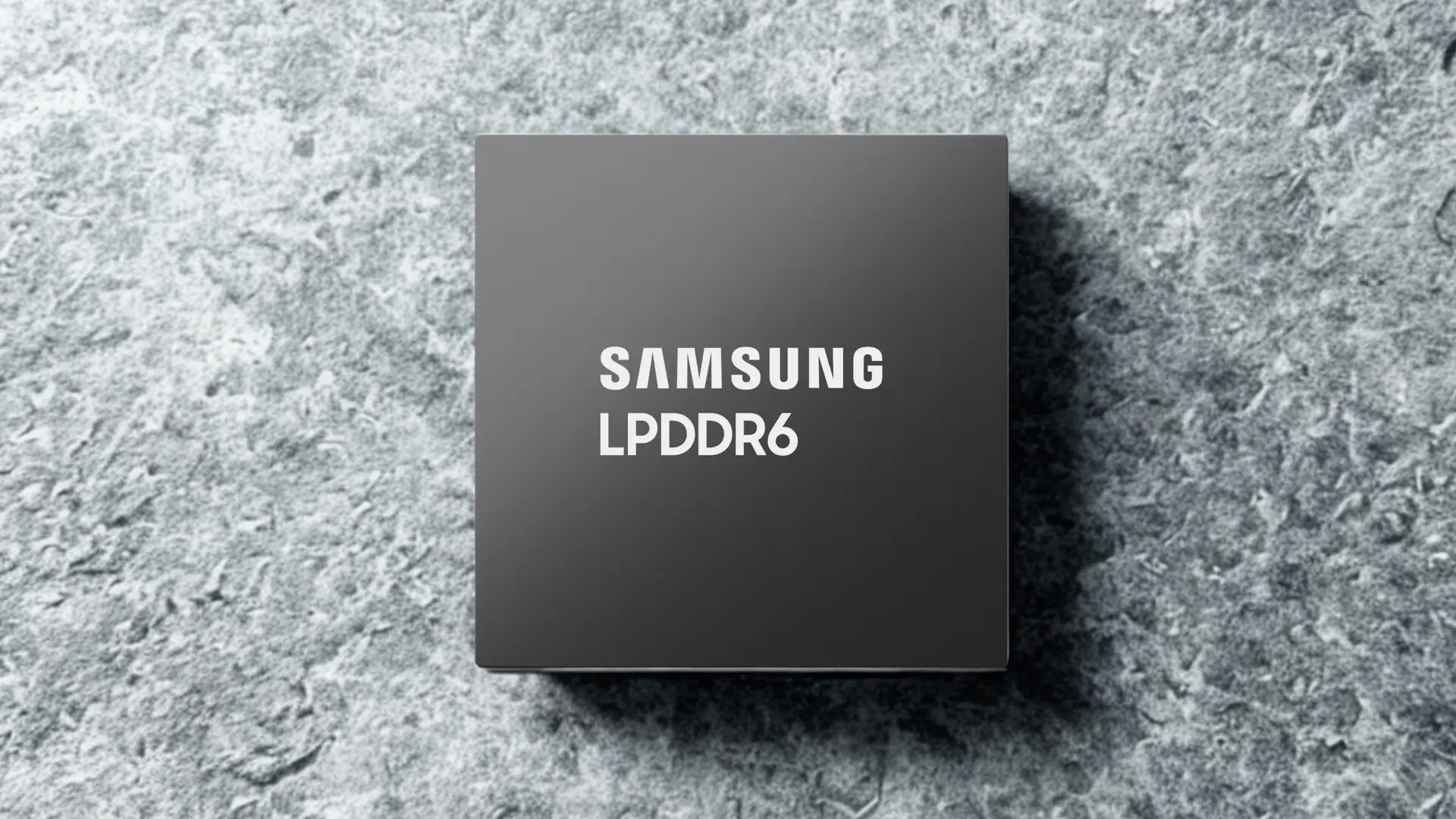

Samsung has made its new memory official LPDDR6 (Low Power Double Data Rate 6)a key step for mobile phones of 2026. The company highlights greater speed, better efficiency and new security features aimed at improving autonomy and reliability in mobile AI (artificial intelligence) scenarios, games and high-resolution video capture. The firm has also received prior recognition in the CES (Consumer Electronics Show) by this chip, which shows its maturity.
The leap comes after the publication of the standard by JEDEC (JEDEC Solid State Technology Association) and fits with industry plans to accelerate low-power memory. Samsung goes ahead with a 12 nanometer process and maximum speeds that place LPDDR6 well above LPDDR5Xpaving the way for future flagships. For the user, this will translate into more agile applications, lower energy consumption and greater stability.
LPDDR6 vs LPDDR5X: speed, efficiency and reliability
The new generation raises the bar with transfer rates of up to 10.7 Gbps per pin on the Samsung chip and a channel design that improves the latency and concurrent access. In other words, bottlenecks are reduced when running generative AI models, editing video, or loading scenes in demanding games. Compared to LPDDR5X, the increase is notable and should be noticeable in heavy tasks.
There are clear improvements in energy efficiency thanks to mechanisms such as DVFSL (Dynamic Voltage Frequency Scaling for Low Power) and new low-power static modes. For manufacturers, this opens the door to longer battery life without compromising performance; For users, it means less thermal limitation and more sustained performance in long sessions of intensive use.
Security and data quality: a plus for mobile AI

LPDDR6 incorporates on-die ECC (Error-Correcting Code) and routines self-diagnosis that help reduce bit errors and intermittent failures in demanding memory scenarios. This reinforcement is especially relevant for on-device AI modelswhere the integrity of the data directly influences the results and the stability of the system. There are also improvements to dedicated memory partitions for critical data.
Beyond smartphones, these features are relevant to the automotive industry and edge computing devices. (edge)where it is required low consumption and high reliability. But the first showcase will be in high-end mobile phones, setting the standard for the rest of the Android manufacturers.
What to expect in the next Galaxy
With the standard already published and the Samsung chip recognized as «Innovation Award Honoree«Everything indicates that Galaxy S26 series It will be one of the first to incorporate LPDDR6. If integrated with a next-generation SoC, we should see Faster startups, smoother multitasking, and more efficient real-time processing camerasespecially in night photography and HDR (high dynamic range) video.
By calendar, adoption during 2026 seems reasonable and could spread quickly to other manufacturers. Of course, it remains to be seen if the first launches opt for maximum speeds or more conservative profiles to prioritize autonomy.
Samsung LPDDR6 technical sheet
- Manufacturing process: 12nm
- Maximum rated speed: up to 10.7 Gbps per pin (higher goal according to industry roadmap)
- Efficiency: DVFSL and new low-power static modes
- Reliability: on-die ECC and self-diagnosis
- Approach: mobile, automotive and AI at the edge
A necessary leap for the Androids of 2026
The arrival of LPDDR6 It's the push they needed high end android phones to accompany the wave of AI on the device without penalizing autonomy. If Samsung delivers on its promise, we will see faster and more stable phones on a daily basis. Do you think you will notice the change compared to LPDDR5X or would you prefer improvements in other areas such as camera or charging? We read you in the comments.