



Huawei has taken advantage of his annual event in Shanghai to detail an ambitious plan with which he wants to guarantee Computing power for ia On a large scale during the next few years. The company presented two new Superpods (your computer nodes) called Atlas 950 and Atlas 960in addition to a full road map for their accelerators Ascend Until 2028. All this occurs in a context complicated by the restrictions imposed by the United States, which limit Huawei access to semiconductors and key technologies.
Beyond the political plane, the relevant thing for the user is that these platforms will train and execute the models that will then reach our mobiles and services. If Huawei manages to display his superpods and his new generation of chips, we will see more generative functions in its ecosystem, and will exert additional pressure on its rivals to keep up.
Superpods Atlas 950 and 960: Big power
Huawei says that 950 Superpod Atlas will be available in the fourth quarter of 2026 and will be its most powerful supernod to date. In its complete configuration you will integrate Up to 8192 Ascend 950dt acceleratorswith 160 cabinets (128 computation and 32 communications) and a totally optical interconnection. In numbers, the manufacturer talks about 8 efflops in FP8 and 16 efflops in FP4in addition to an internal bandwidth that far exceeds that of previous generations. These figures are designed to train models with hundreds of billions of parameters and execute large -scale inferences.
A level above is the atlas 960 superpod, planned for the fourth quarter of 2027. This system practically doubles the specifications: Up to 15488 Ascend 960, 30 efflops in FP8 and 60 efflops in FP4with 4460 TB of memory and 34 Pb/s of internal interconnection according to the company. The road map also contemplates Superclusters that chain dozens of superpods to create even greater infrastructure. The objective is clear: Autonomy and computer muscle to compete without depending on American technology.
Technical keys to new superpods
- Atlas 950: up to 8192 Npus ascend 950dt, 8/16 efflops (FP8/FP4), 160 cabinets, availability Q4 of 2026.
- Atlas 960: up to 15488 Npus ascend 960, 6/300 efflops (FP8/FP4), 220 cabinets, availability Q4 of 2027.
- Superclusters: add multiple superpods to reach between half a million and one million npus.
Ascend roadmap: four chips in three years
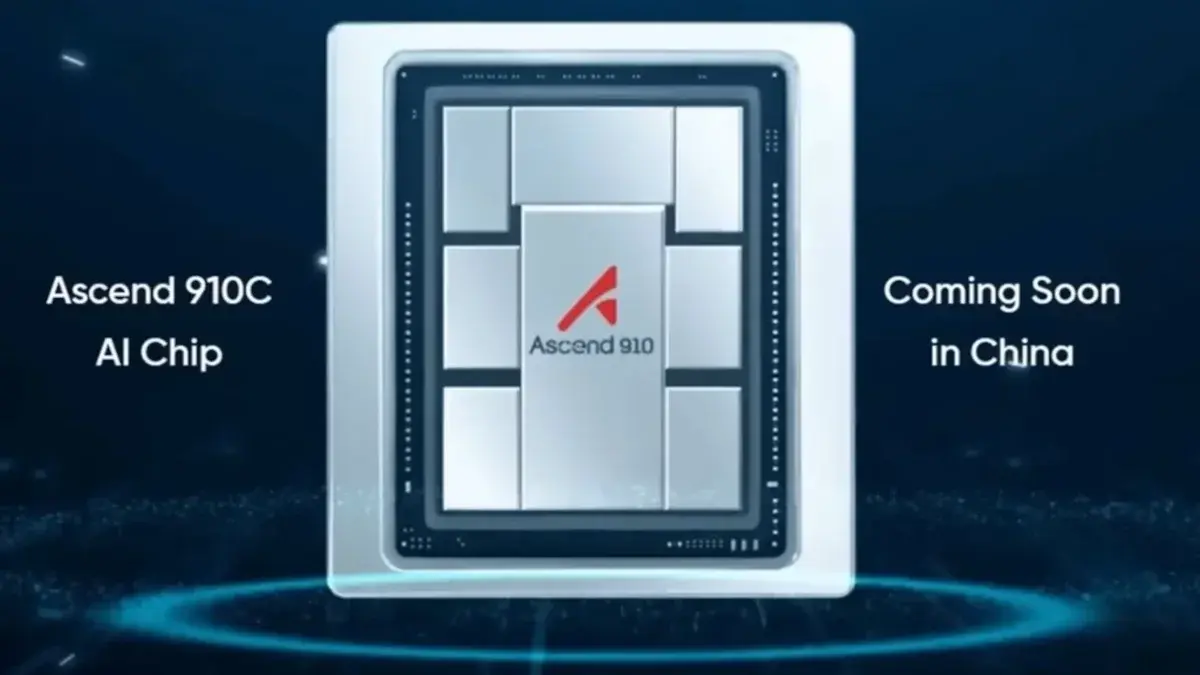
 The other great novelty is the Ascend series route map. Huawei will differentiate two variants from Ascend 950: 950PR Optimized for the data preload phase (in English, prefill) and 950DT (Oriented to the Decoding and training). The first It will arrive in the first quarter of 2026 And the second, in the Fourth quarter of 2026. By 2027 the Ascend 960that DUPLICA The computation, memory and interconnection ports compared to 950. In 2028, the cycle will close the Ascend 970with another performance and bandwidth jump.
Beyond the dates, Huawei highlights the use of low -precision numerical formats (FP8/FP4 and own as HIF8/HIF4) to improve Energy efficiency without losing quality in the results. He also talks about Own HBM (HIBL 1.0 AND HIZQ 2.0) and one 2 TB/S interconnection By chip in the Ascend 950, key pieces for climbing models and reducing bottlenecks. The objective is clear: renew annually and double the computing capacity in each generation.
Ascend road map summary
- Ascend 950PR (prefill and recommendation): Superpod cards and servers; Available in Q1 of 2026.
- Ascend 950dt (Decoding and training): 144 GB HBM, 4 TB/s Memory bandwidth; Q4 of 2026.
- Ascend 960: × 2 In computation, memory and ports regarding 950; Q4 of 2027.
- Ascend 970: Additional performance and interconnection jump; Q4 of 2028.
- What does it mean for mobiles and for the Android market
Although these figures sound distant from day to day, their impact is direct. Without access to last generation NVIDIA GPUS, Huawei seeks self -sufficiency to train own models (such as Pangu and derivatives) and offer Characteristics of AI that we will see in Harmonyos and in their mobiles. If the plan is met, the brand's devices could win in translation, photo/video edition, contextual assistants and productivity functions They depend on better trained models.
For the Android market, the play introduces More competition in the computer layer: Google pushes tpus in the cloud and npus in the tensioner chips, Samsung advances with Gauss and Qualcomm with Oryon and Hexagon, while Huawei wants close the circle From the data center to its devices. The unknowns persist around the manufacture (nodes, packaging and supply of HBM) and in the Software ecosystem that competes with CUDA: two pieces as critical as the silicon itself.
In short, beyond the sanctions, the message is that Huawei does not get off the AI train: Larger superpods, own chips and annual cycles. It remains to be seen if the promises are fulfilled in the planned deadlines and if that thrust translates into best real experiences In the products we use every day. Do you think this strategy will allow Huawei to compete from you to you with the leaders of AI?