


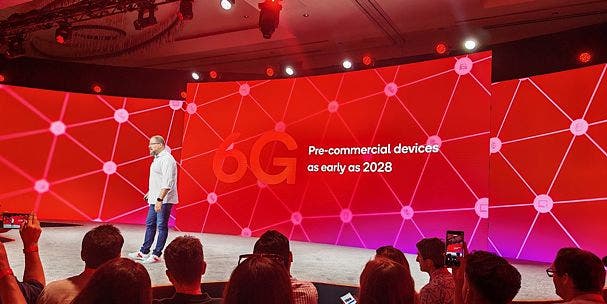

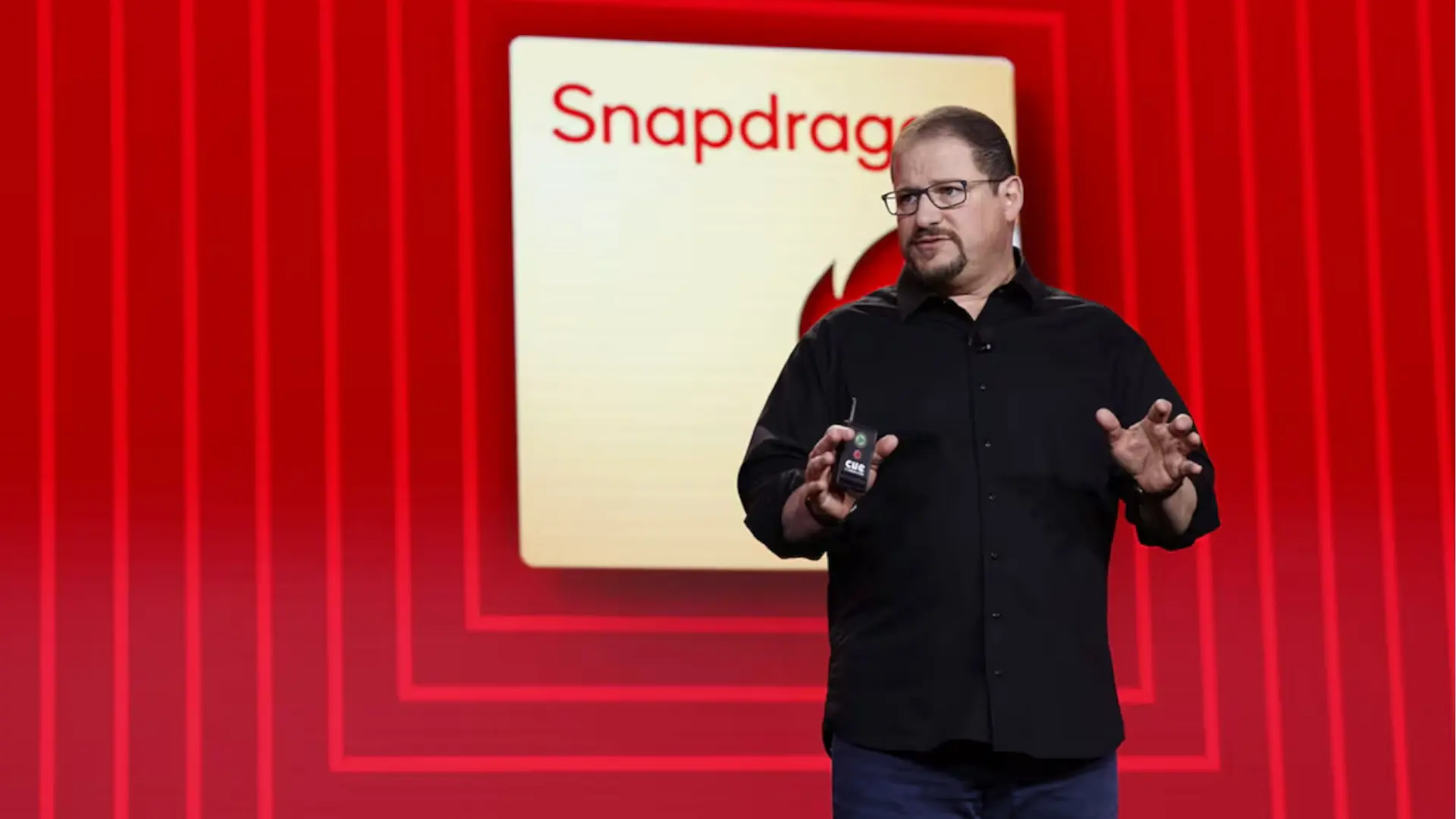
Qualcomm has put the first stone of 6g With a specific promise: There will be precomercial devices in 2028. The announcement came during the Snapdragon Summit 2025where his CEO, Cristiano Amon, pointed to a new wave of connectivity that will go beyond mobile phones to include smart rings, glasses and other wearables, along with AI agents that will operate in the background. It is not just a speed increase, but a change in architecture oriented to considerably more intelligent networks and devices.
The calendar fits with the natural evolution of the industry. While 5G -Advanced continues to deploy and mature, the 6G emerges a scenario in which the network will better understand the context, will integrate capabilities of Sensate and more precise positioning and will operate in higher bands (terahercios) to offer more capacity and lower latencies. What supposes this for Android users and for the ecosystem? We go in parts.
6g: more than speed, a native network
The main promise of 6G is not just multiplying megabits. The next generation is conceived as a contextual network, capable of mixing connectivity and computing so that the devices collaborate with each other and with the cloud. In that model, mobile phones will continue to be the center, but Light devices (Rings, watches, glasses) will take center stage to delegate tasks on the phone and in the Edge.
Another key axis is the use of the terahercios spectrum. Working at higher frequencies will allow Speed peaks and Ultrabaja latencyat the cost of dense cells and new antenna techniques. In addition, the 6g seeks Integrate sensated on the network itself to improve functions such as centimeric positioningdetection of the environment or communications more reliable in mobility. For the user, this translates into most reactive apps, immersive streaming and more stable mixed reality experiences.
Keys that are already handled in 6g
- In the network and on the device to optimize coverage, consumption and quality of service.
- Spectrum above 100 GHz (Terahercios) For more capacity in specific scenarios.
- Integrated positioning and sensation For precision services and new use cases.
- REnergically more efficient and with better interior coverage.
- Central role of wearables: Rings, glasses and watches that delegate to the mobile and Edge.
Dates: 2028 for tests, 2030 for commercial take -off
Qualcomm data talks about Precomercial devices in 2028. That fits with the standard road map: first they arrive prototypes and pilots with operators, and Later commercial launches. 3GPP standardization travels DELEASE 20 (STUDIES) and DELEASE 21 (Specifications 6g); With that cadence, the commercial deployment window points to 2030. That is, 2028 would mark the beginning of the large -scale tests and 2030 the moment in which we could see the first 6G mobiles for sale.
Meanwhile, 5G -Advanced It will remain the bridge. Between 2025 and 2027 we will see Improvements in coverage, efficiency and latencytogether with functions that prepare the 6g terrain (smarter networks, improved positioning or repeaters controlled by the network). For the user, the message is clear: Your next 2026-2027 mobile will continue to squeeze the 5Gand the 6G jump will already arrive with a mature base and clearer applications.
What does Android, manufacturers and operators mean
For Android manufacturers, the challenge is in Homologge modems and antennas capable of operating in new bands, without shooting consumption or cost. The AI on the device and the Personal agents They will gain weight, coordinating the phone with rings and glasses. We'll see New form factors that take advantage of minor latencies and more reliable connectivity.
For operators, 6G implies Intelligent densification (small cells where they contribute value), a more automated network core and Programmable network functions to sell services by quality levels (latency, precision, safety). On a day to day, users will notice Better interior coverage, most stable cloud games, Instant video ups and translation and real time With less dependence on the cloud if desired.
6G accelerates the age of mobile AI
The great reading of the announcement is that The next decade of the mobile will be that of the IA integrated in everything: devices, network and services. 6G does not replace 5G overnight; it complements and lo Take a step further in capacity, precision and efficiency. If Qualcomm meets the deadlines and the standard accompanies, 2028 It will be the starting point for massive tests, and 2030 The year you will start considering if you compensate you to make the leap to a 6G phone.
It is also necessary to mention that companies such as Huawei already have time working In this 6G connection class. We are sure that competition in this regard will be interesting in a couple of years, we will be attentive to what is coming.
Do you think it is worth waiting for 6G or is enough with a good 5G -Advanced mobile in the coming years?