


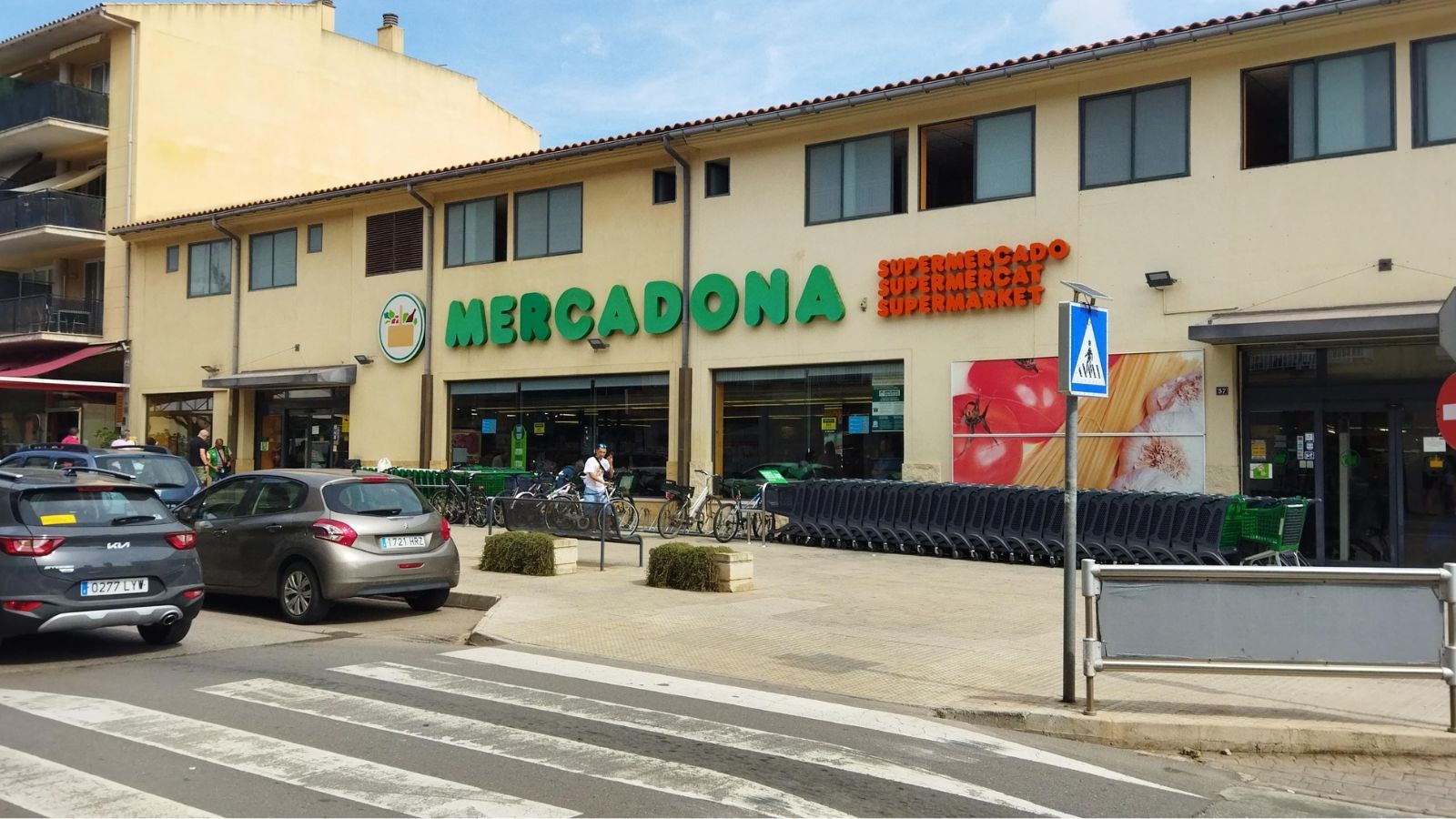

Mercadona billed $46.1 billion in 2025, a figure that exceeds the sum of the sales of Carrefour, Lidl, Dia, Eroski, Alcampo and Consum combined by 500 million. The Foreign Agricultural Service of the United States Department of Agriculture (USDA) highlights the weight of the Valencian chain within Spanish food distribution, where its presence transcends even the commercial sphere.
If you shop every week at the supermarket, you probably already sensed that Mercadona dominates the sector clearly. The figures confirm its leadership in billing, market share and customer loyalty, in addition to the important weight of its own brands. Let’s see how the rest of the sector looks and how food distribution in Spain is evolving.
Mercadona surpasses its six main competitors in billing
According to 2025 sales estimates managed by the USDA, Carrefour occupies second place with 13 billion dollarsahead of Lidl, which totals 8.5 billion. Dia remains at 7,000 million, Grupo Eroski at 6,500 million, Alcampo at 5,500 million and Consum closes the classification with 5,100 million.
If you add those six figures, the result is 45.6 billion dollars, just the 500 million dollars that separate them from the billing of Mercadona. In other words, the company chaired by Juan Roig alone moves more money than its six main rivals combined. None of these chains separately comes close to the size of the Valencian company, which reflects its dominant position within food distribution.
The market share confirms that leadership: Mercadona concentrates more than 27% of sector salesa percentage equivalent to that of Carrefour, Lidl, Eroski, Dia and Consum together. Furthermore, nine out of ten Spanish consumers shop in their supermarkets at least occasionally, compared to 62.4% for Lidl and 56.7% for Carrefour.
White brands also continue to gain prominence and already represent the 52% of the value of the Spanish shopping basketthe second highest percentage in Europe, only behind the Netherlands. This search for adjusted prices has a reverse: almost 58% of purchases are made outside the usual supermarket, an example of the change in consumer habits and the growing competition between chains.
Lidl and Dia gain ground against Mercadona’s dominance
Lidl continues to gain market share and leave behind its image as a supermarket focused exclusively on low prices to become a complete shopping option. Dia, for its part, has raised a 12.7% annual visits to their stores. Among the regional chains, Consum concentrates three quarters of the growth of this group of operators.
The evolution of the Spanish market also opens new commercial opportunities for the United States. Spanish imports of US agri-food products amounted to $2.85 billion in 202527% more than the previous year.
Among the products with the greatest commercial potential are almonds, pistachios, walnuts, legumes, fish, food preparations, sauces and condiments. The size of the Spanish market and the growing demand for innovative and specialized products favor these opportunities, in an increasingly competitive sector in which Mercadona maintains its leadership.