


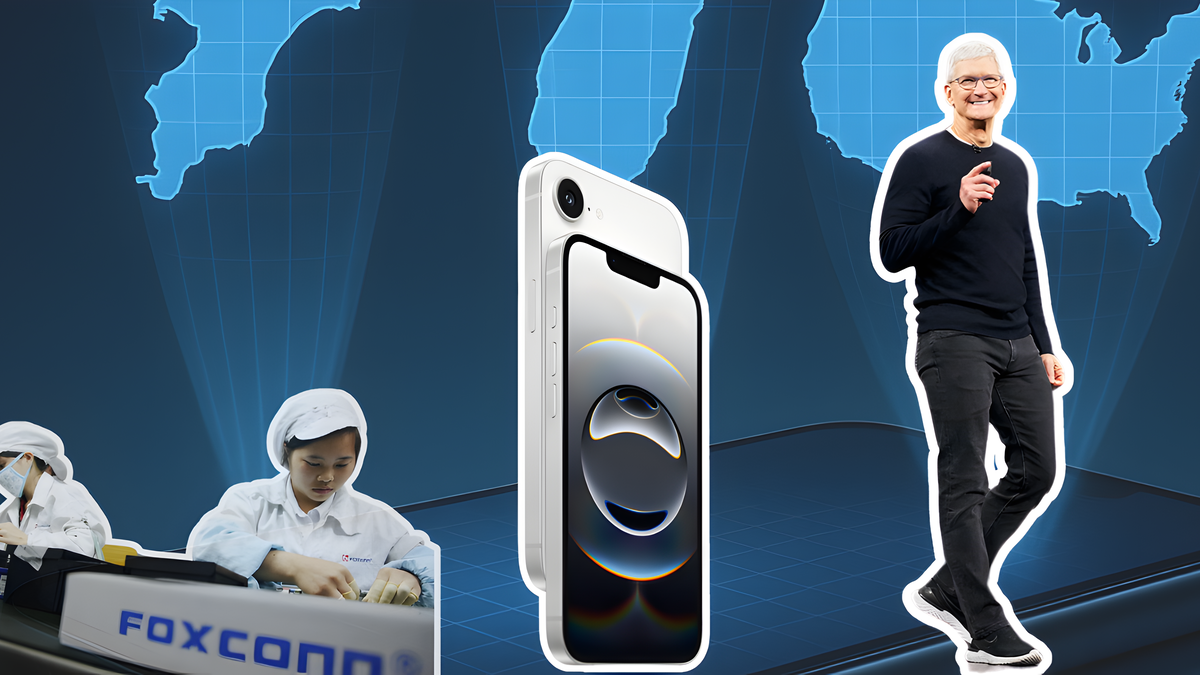

Manufacturing an iPhone involves a complex process that requires logistics that are difficult to imitate. Beyond any current situation, this reflects Apple’s hard work consolidating a network of services and suppliers over the years. Thus, the “Designed in California” and “Made in China” legends visible on the smartphone with the Apple logo aren’t entirely true, if you want to be specific. In reality, it involves 30 countries.
An interesting investigation published in Lifewire debunks the popular belief that iPhones are manufactured entirely in Apple’s vast Chinese factories. The reality is that these facilities are primarily assembly centers for parts created in every corner of the planet.
Where each iPhone component is manufactured

While Apple meticulously designs every aspect of the iPhone, it doesn’t directly manufacture its parts. Instead, the company partners with an army of specialized manufacturers worldwide. Each of these suppliers focuses on producing specific elements: from the camera lenses to the touchscreen, memory chips, and sophisticated processors.
Some of the key or interesting parts suppliers for some iPhones and where they operate include:
- Accelerometer: Bosch Sensortech, headquartered in Germany with offices in the US, China, South Korea, Japan, and Taiwan
- Audio chips: Cirrus Logic, headquartered in the US with branches in the UK, China, South Korea, Taiwan, Japan, and Singapore
- Drums: Sunwoda Electronic, based in China, together with Amperex and Desay
- Camera: Sony, headquartered in Japan with branches in dozens of countries
- Chips for cellular networks: Qualcomm and Apple
- Compass: AKM Semiconductor, headquartered in Japan with branches in the US, France, England, China, South Korea, and Taiwan
- Glass Display: Corning, headquartered in the U.S., with offices in Australia, Belgium, Brazil, China, Denmark, France, Germany, Hong Kong, India, Israel, Italy, Japan, South Korea, Malaysia, Mexico, the Philippines, Poland, Russia, Singapore, South Africa, Spain, Taiwan, the Netherlands, Turkey, the United Kingdom, and the United Arab Emirates.
- Gyroscope: STMicroelectronics. Headquartered in Switzerland with offices in dozens of countries.
- Flash memory: Kioxia, headquartered in Japan with branches worldwide, and Samsung
- LCD displays: Sharp, based in Japan with branches in several countries, and LG, based in South Korea with branches in Poland and China.
- M and A series processors: TSMC, headquartered in Taiwan with subsidiaries in China, Singapore, and the US. Touch ID: TSMC and Xintec, headquartered in Taiwan.
- Touchscreen Controller: Broadcom, headquartered in the US with branches in Israel, Greece, the UK, the Netherlands, Belgium, France, India, China, Taiwan, Singapore, and South Korea
- Wi-Fi chip: Japan-based Murata supplies Wi-Fi modules. The base chip is usually manufactured by Broadcom.
Each to his own
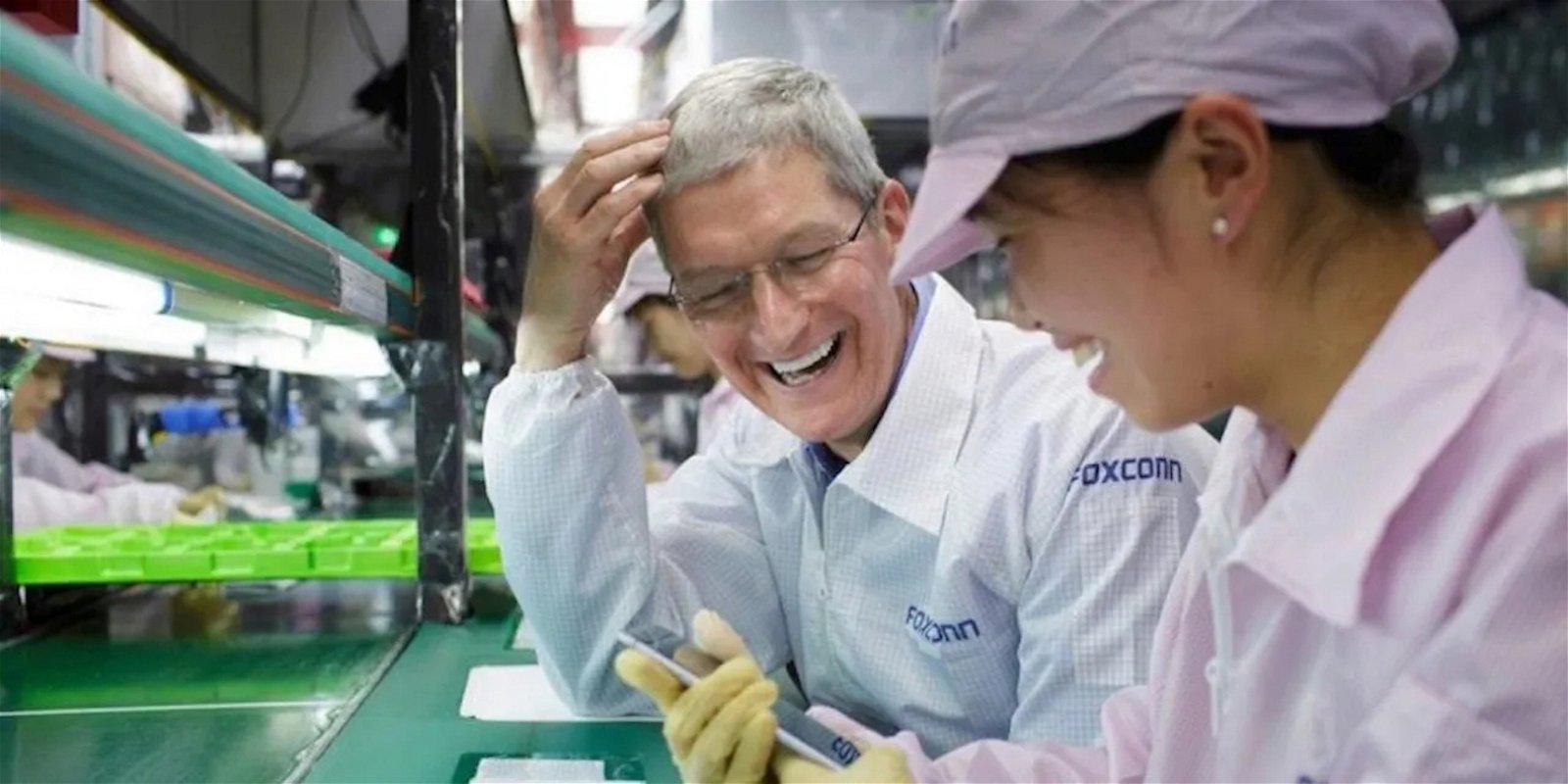
Finally, all these components, produced in more than 30 countries, converge in assembly plants. Traditionally, most of this process has taken place in the giant factories of Foxconn and Pegatron, both based in Taiwan and with a strong presence in China.
Foxconn’s iconic iPhone City in Zhengzhou has been the epicenter of iPhone assembly for years. However, in recent years, Apple has sought to diversify its supply chain, expanding assembly operations to countries such as India, Brazil, and Vietnam, thereby reducing its dependence on any single region.
The question of where the iPhone is made has a fascinating answer that transcends the borders of a single country. The device we carry in our pockets is the result of a global collaboration, with specialized components traveling from more than 30 countries to be assembled, primarily in Asia.