

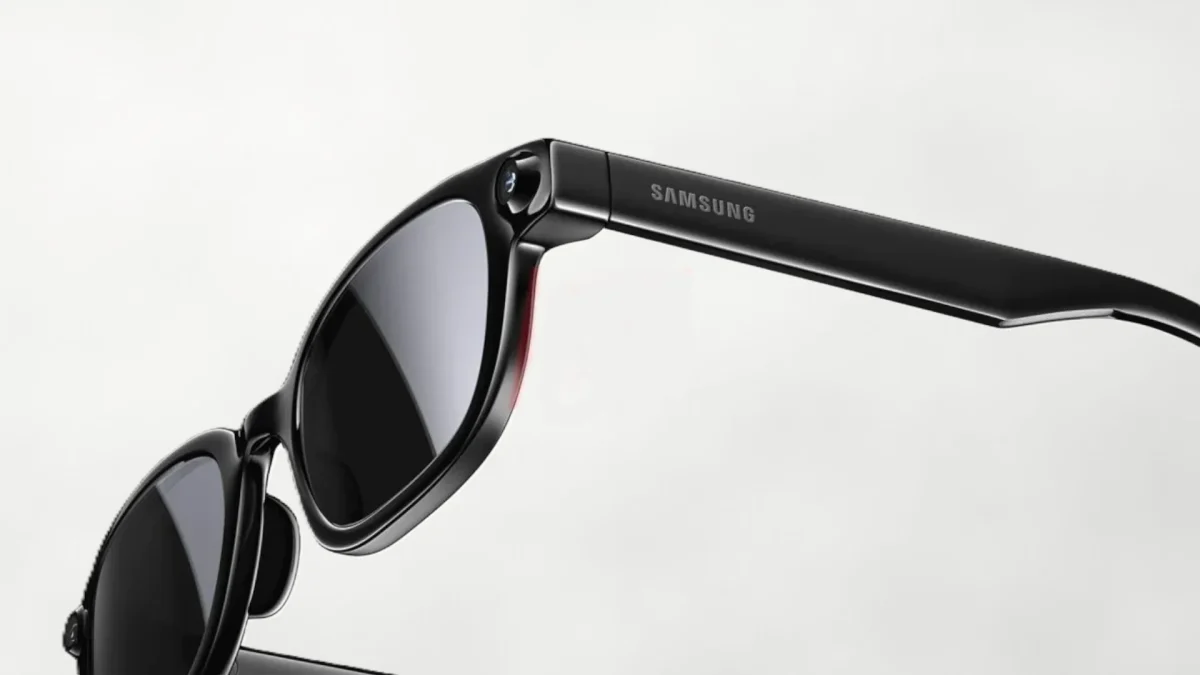

The first leaked images of the Samsung Galaxy Glasses They confirm what many suspected: Samsung is going to play it safe with its first model. The renders of the device codenamed “Jinju”, published by the leaker OnLeaks together with AndroidHeadlinesshow glasses without an integrated screen with a design very similar to that of the popular ones Ray-Ban Meta. No holograms or floating screens, at least for now.
Beneath that discreet frame hides quite specific technology: chip Qualcomm Snapdragon AR1camera Sony IMX681 12MP155 mAh battery, WiFi and Bluetooth 5.3as well as directional speakers and photochromic lenses that darken in sunlight. The estimated weight is around 50 gramswhich is reasonable to wear them all day. The software will run on Android XR with Gemini integrated, the same platform that already powers the Galaxy XR.
A copy of the Ray-Ban or a real alternative?
The comparison with the Ray-Ban Meta is inevitableand Samsung doesn't even avoid it. The South Korean company wants to emulate the Meta model, betting on a modern design with Transitions-type lenses, although it remains to be seen if they reach an agreement with EssilorLuxottica —owner of Ray-Ban— or use their own alternative. One of the most interesting details is that the Galaxy Glasses could include mobile data connectivity, something that the Ray-Ban Meta do not have and that would make them more independent from the phone.
The launch is expected for the Unpacked event in July, where they would share the stage with the Galaxy Z Fold 8. Samsung's strategy is clear: launch this model without a screen in 2026 and reserve the glasses with microLED for 2027, when the technology is more mature. As for the price, rumors point to a range of between 379 and 499 dollarsalthough the source itself acknowledges little certainty in this regard.
In short: promising glasses, with decent specifications and a pragmatic approach, but they reach a market where Meta has an advantage. Will Samsung be able to convince users to change ecosystems, or will Galaxy Glasses remain another attempt by the industry to normalize smart glasses?