


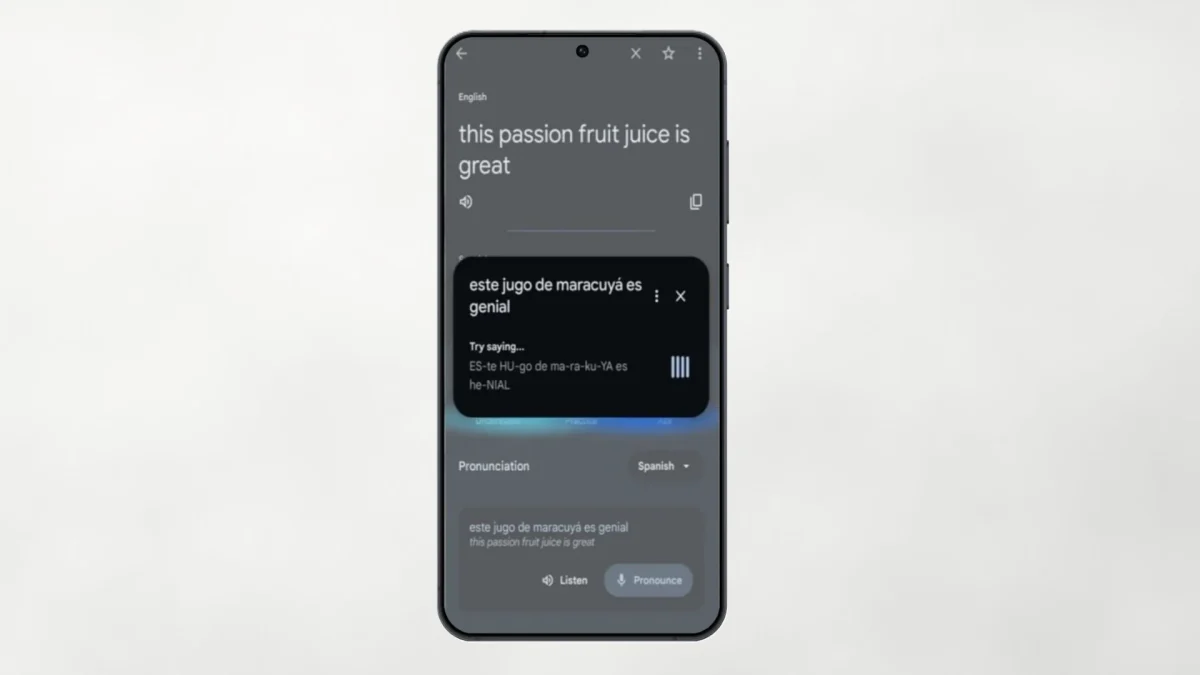

We have been turning to Google's tool for a long time to get us out of trouble in another language, but the company wants to go one step further. According to recent findings in the application's code, we will soon stop using it just to read texts and start speaking to it to improve our accent. The new pronunciation practice feature seeks to transform a quick reference utility into an active study platform.
The mechanics seem simple, but ambitious: the application will show you phrases and ask you to read them aloud. Using the mobile microphone, it will evaluate your precision when speaking and will give you instructions to correct errors. Although the idea sounds great on paper, it remains to be seen if the voice recognition will be fine enough to not frustrate the user with false negatives, a recurring problem on similar educational platforms.
A shift towards interactive learning
It is clear that the technology company has the resources to compete with digital education giants, but this characteristic is still limiting its reach. So far the functionality is available in the United States and India, allowing you to practice English, Spanish and Hindialthough it is expected to reach other regions soon. Indications suggest that its global rollout will be progressive, adding more languages to its catalog. Don't expect it to replace a real teacher overnight, as the focus seems to be on repetition and not deep grammatical understanding.
This move makes perfect sense if we look at the platform's recent history. For some time now the Google Translate app has been integrating new features such as learning functions and real time translationdemonstrating that its objective is no longer just to decipher isolated words, but to make us truly communicate with the world.
Do you think this new tool will stop us from using applications dedicated exclusively to learning languages?