



The arrival of Android 17 Beta 3 It brings floating windows and a redesigned volume control, but among its novelties there is one that goes more unnoticed and that probably matters more to those who need it: reinforced protection for users of hearing aids and cochlear implants.
The problem it solves is easy to understand. Until now, when an Android phone received a notification, call or alarm, that sound could be played directly inside the hearing aid, sometimes at considerable volume. For someone with already compromised hearing, that kind of abrupt interruption is not only annoying, but potentially harmful.
Two new adjustments in the hearing section
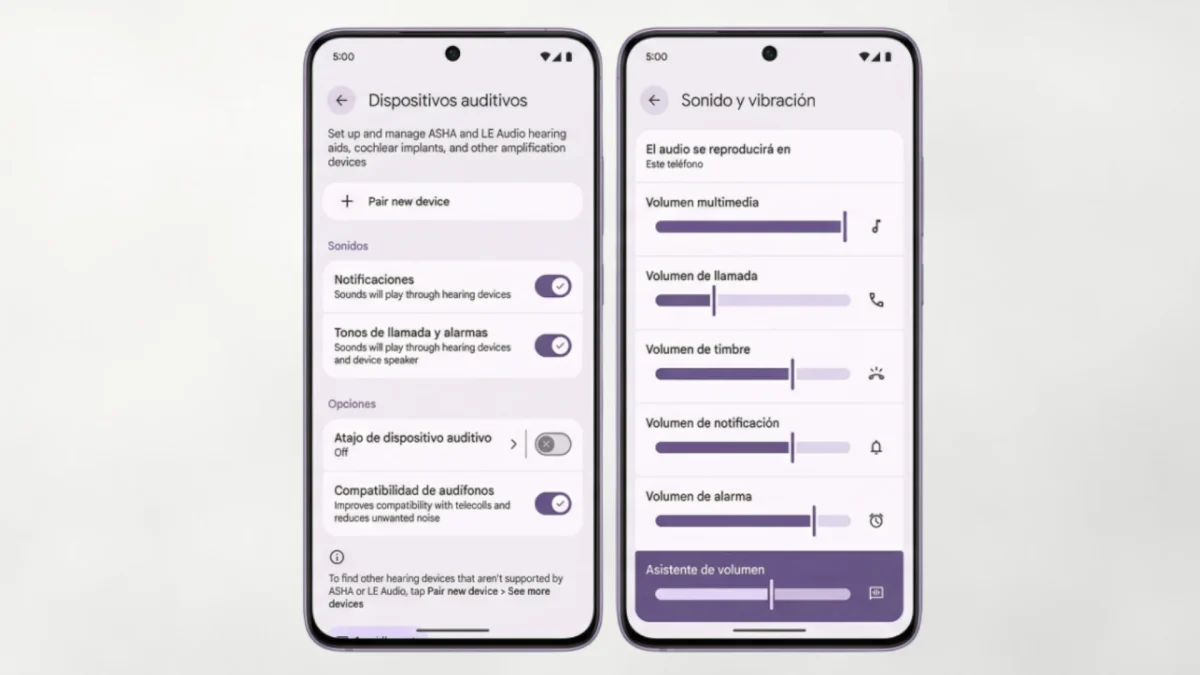
Google has added two switches inside “hearing devices” in the accessibility settings of Android 17. The first allows you to silence notification alerts so that they do not ring directly on the hearing aid. The second does the same with ringtones and alarms, preventing them from playing at high volume when a hearing device is connected.
Compatibility is not limited to ASHA hearing aids —the usual Bluetooth standard on Android—, but also encompasses cochlear implants and other hearing medical devices, expanding the scope beyond the most common case.
What is notable is that these functions arrive in the platform stability phasewhich means that they will almost certainly be part of the stable version of Android 17. They are not experiments that can disappear; They are commitments. Google is moving at a good pace towards the final launch of the system, and details like this show that accessibility is gaining real weight in its roadmapnot as filler for press releases, but as a structural part of the operating system.
Do you think that Android is finally giving the importance it deserves to accessibilityor is there still too much way to go?