


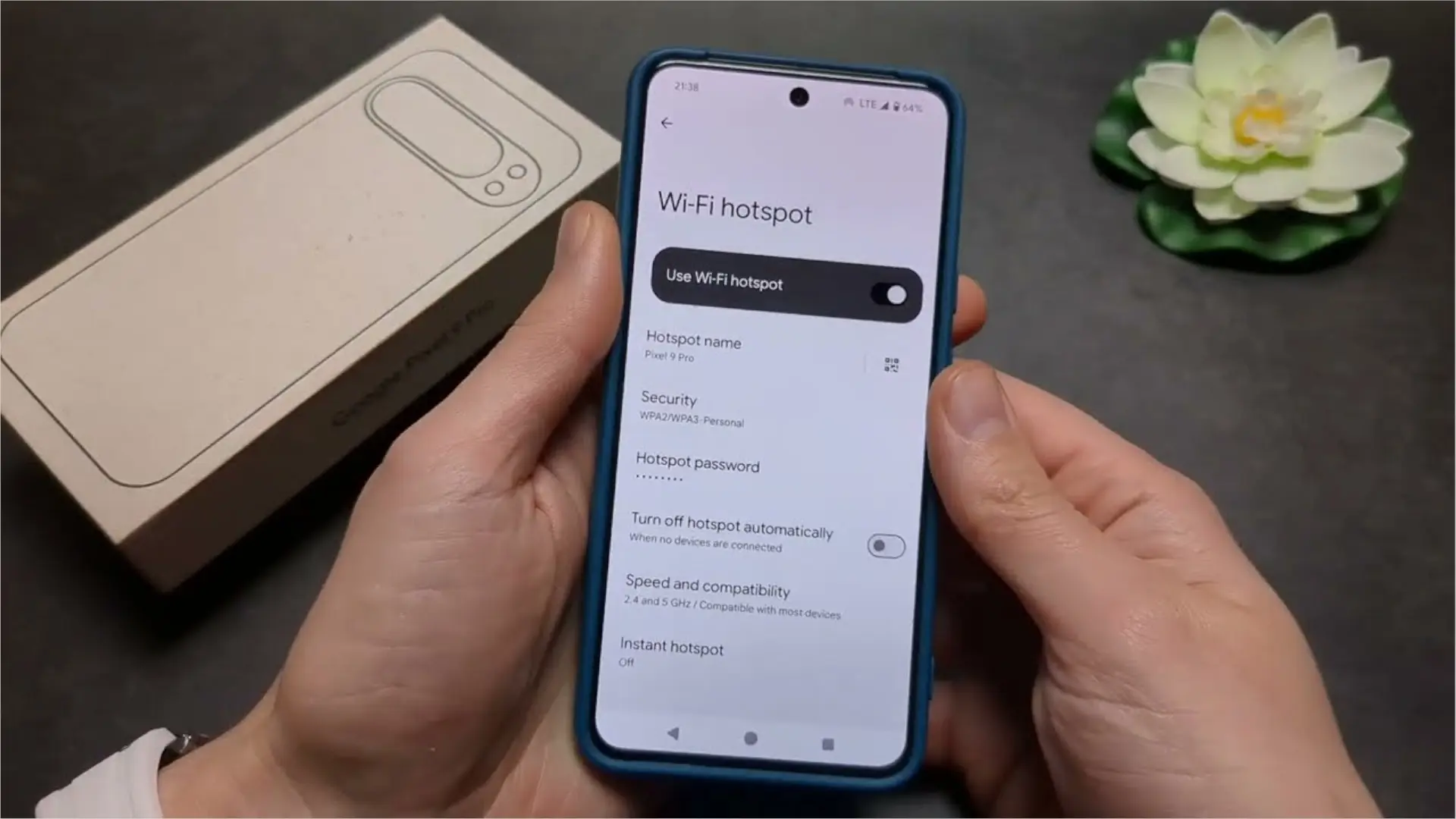

Google is testing a new 2.4 and 6 GHz Wi-Fi hotspot mode which promises the best of each band: the same compatibility with older devices and the maximum speeds for the most modern mobile phones, laptops and tablets. The function has appeared in the latest preview version of the system, where a specific option called “2.4 and 6 GHz” is added in the speed and compatibility settings of the access point.
Until now, most Android phones created by default a Wi-Fi access point that shared the connection through networks Wi-Fi on the 2.4 and 5 GHz bandsand in some recent models you could force a hotspot only in 6 GHz, designed for devices with Wi-Fi 6E or Wi-Fi 7. The problem was that this option prevented access to many older devices and, in addition, the use of the 6 GHz band was restricted in some countries for regulatory reasons, so almost no one touched the setting.
A Wi-Fi mode designed for compatibility and speed
With the new mode of dual 2.4 and 6 GHz hotspotthe mobile creates two simultaneous networks from a single access point: compatible devices connect in the 6 GHz band to squeeze out the available bandwidth, while the older ones continue to enter through 2.4 GHz as always. For the user, the experience is transparent; You don't have to change anything every time you share data.
The 6 GHz band offers wider and less saturated channels, so it can reach speeds much higher than those of 2.4 and 5 GHz, although, in exchange, it has a shorter range and is more affected by walls and obstacles. The approach of Google seeks to compensate for these limitationsleaving the 2.4 GHz band to act as a backup network, although greater battery consumption is expected as more radios are activated simultaneously.
Which mobile phones will be able to use the 2.4 and 6 GHz hotspot

This novelty currently appears in an early compilation of Android 16and everything indicates that it will debut in a stable way with some system update of the type Android 16 QPR3 for the Google Pixel. From then on, each manufacturer will decide whether or not to activate it in their layers, as is already the case with other advanced connectivity settings, which in some models are hidden or limited by the manufacturer.
To take advantage of the 2.4 and 6 GHz hotspot, the mobile phone will need to have compatible hardware: that is, a Wi-Fi 6E or Wi-Fi 7 with support for the 6 GHz band and that the country's regulations allow it. Additionally, the manufacturer has to enable simultaneous hotspot mode in their software. Many mid-range phones and older models will probably be limited to the classic 2.4 and 5 GHz, so it should not be taken for granted that this option will be available.
If you usually use your cell phone as a router when you are traveling, working away from home, or connecting your laptop to the cell phone network for an important video call, this dual hotspot mode could save you complications. Modern devices will enjoy better speeds and lower latency, while older devices will still connecting without you having to fiddle with weird settings every time.
In the end, it is one of those little novelties that make your life a little easier without you even realizing it, especially if you often share data with several devices at the same time. All that remains is for Google to finish polishing the feature, include it in the stable version and for manufacturers to decide to activate it on their devices. Do you think you will take advantage of this new hotspot mode or do you have more than enough with the classic 2.4 and 5 GHz?