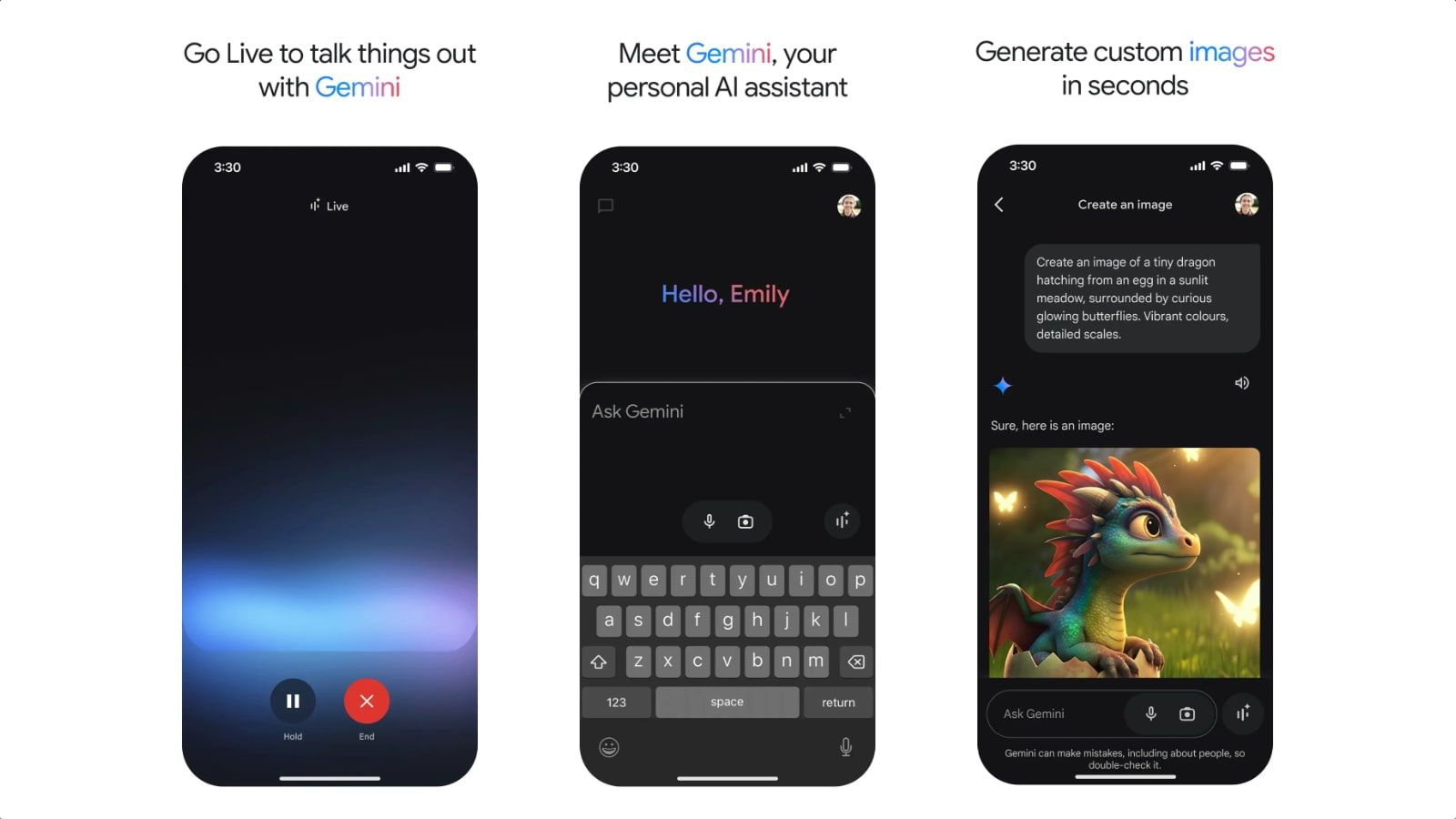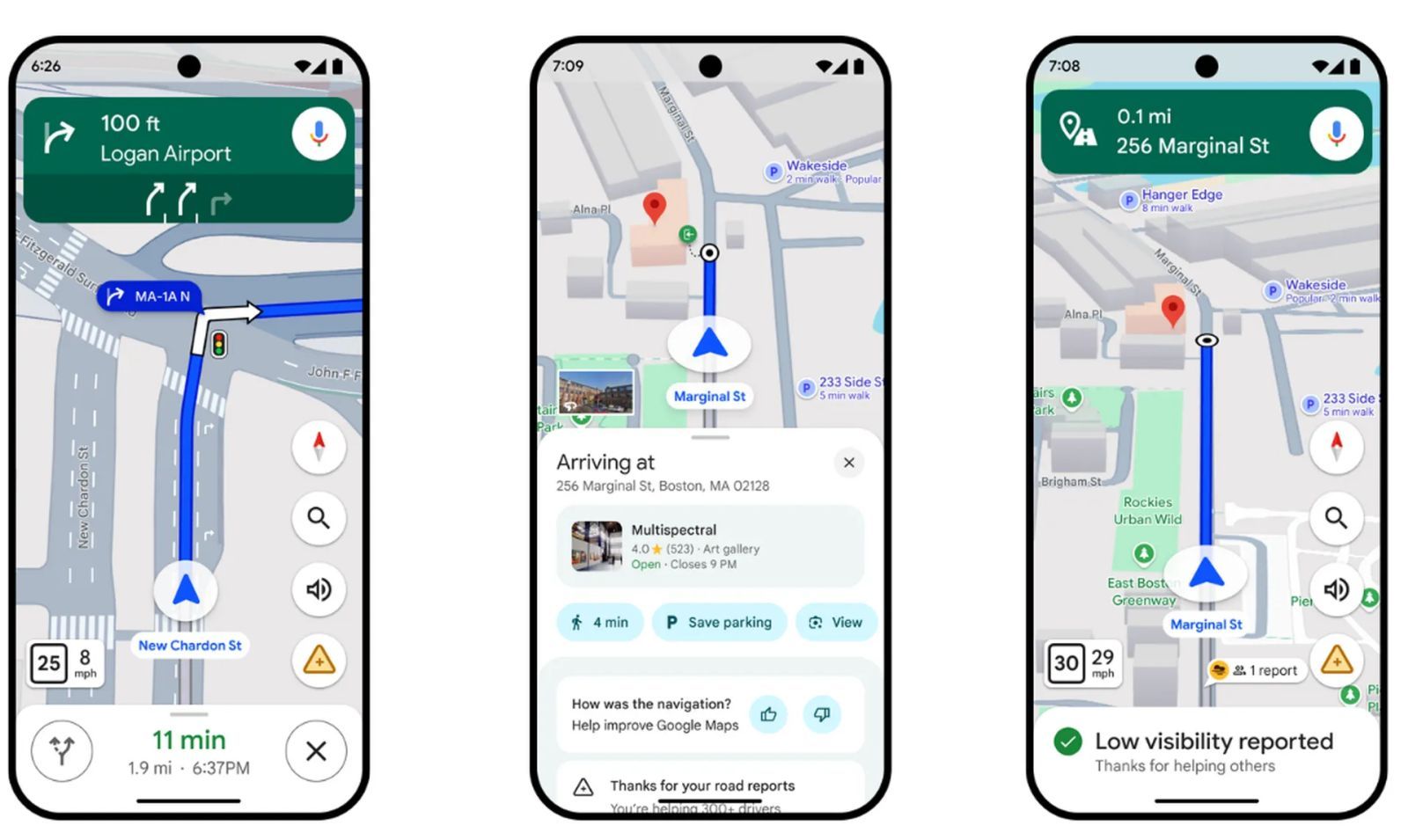



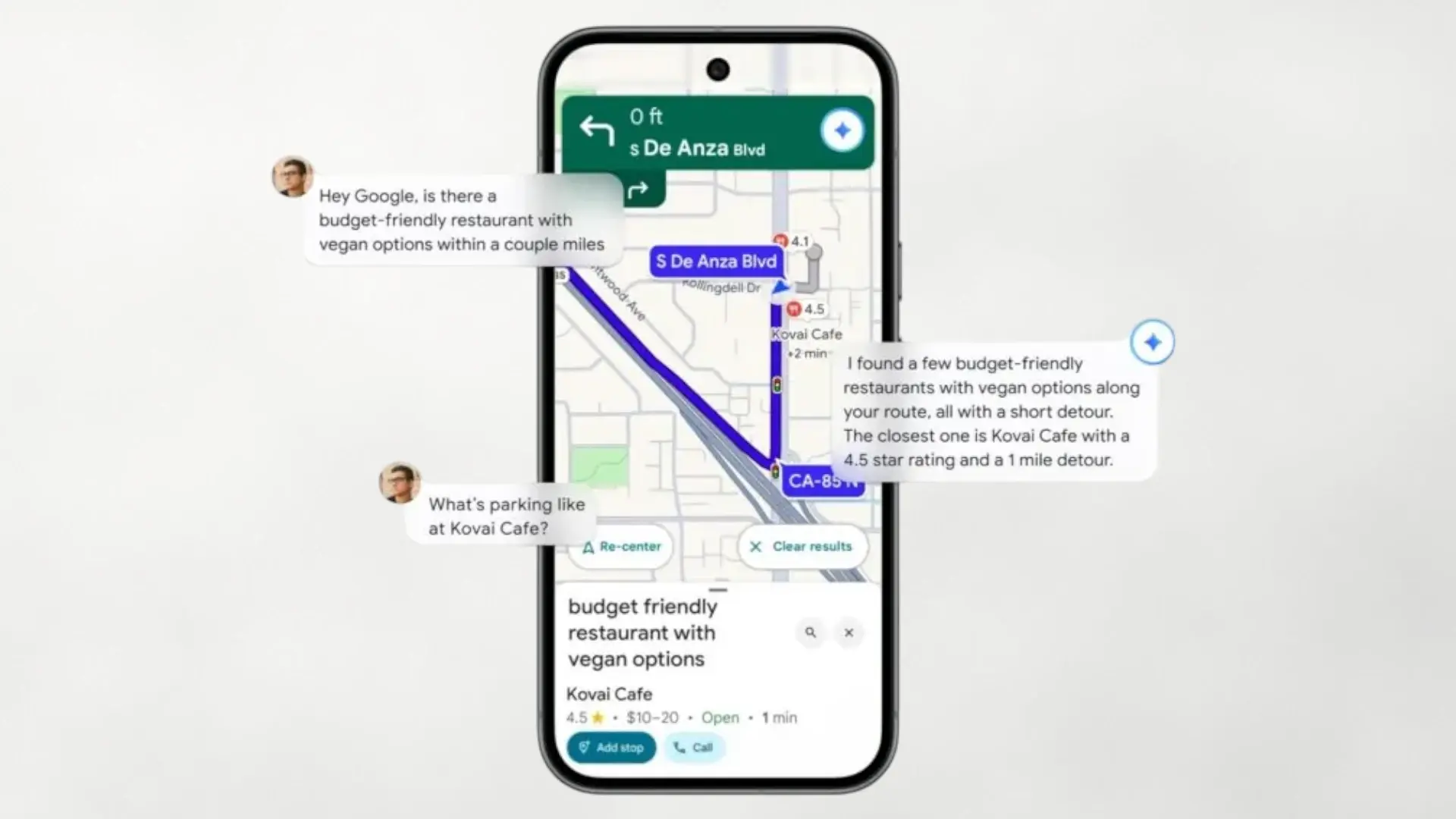

Google is renewing Google Maps navigation with indications based on landmarks and deeper integration of Gemini's conversational AI. Instead of “turn right in 150 meters,” the app will say phrases like “Turn right after the Thai restaurant,” highlighting that business on the map as you approach. Added to this is a Lens powered by Gemini that recognizes places with the camera that will give useful context instantly.
The company aims for these improvements to make driving and moving more natural and without the need to use your hands. Gemini integrates into the navigation interface to respond by voice and understand complex requests, such as avoiding tolls or changing the route without having to touch the screen, in addition to resolving queries such as “is there a cafeteria with a terrace?” 10 minutes?». To achieve this, it relies on Street Viewreviews and geospatial data from millions of points of interest.
More natural prompts: References, alerts and improved context
The indications by references They reduce the ambiguity typical of distances or meter counters. You will see gas stations, restaurants or recognizable buildings highlighted on the map and you will hear clear references, which is especially useful in urban environments with multiple turns in a row. Along with this, Google will activate advance traffic alerts: if there is a traffic jam or incident on your usual route, Maps will suggest alternatives before you get stuck.
Another novelty is the improvement of voice searches in Maps. Now you don't have to go to another app to ask the AI for something: Gemini is integrated into Maps and understands the context of your route, your time and your location. The goal is for Maps to become a co-pilot capable of recommending stops, adjusting route preferences and answering frequently asked questions (time, schedules, average price of a menu, etc.).
Lens with Gemini: Point the camera and get answers
The renewed Google Lens on Maps relies on Gemini to identify facades, signs and premises when pointing the camera. This way you can discover what that building is about, if it is open nowwhat are they recent reviews or if there is nearby alternativeswithout writing a single word. This is useful for tourists and also for those who have recently moved or need to locate references quickly.
Regarding the deployment, Google speaks of a progressive release for Android and iOS. Some functions may debut first in the United States and spread to more regions over time. If you are in the Google Maps betayou may first see the microphone that activates Gemini.
A step forward for the Android user… and for the competition
With these improvements, Maps gains clarity and convenience by not requiring manual interactiontwo key elements while driving and walking. It is also a direct message to rivals like Waze or Apple Maps: AI stops being an extra and becomes the centerpiece of the experience. What do you think about Maps starting to speak “your language” with real-world references? We read you in the comments.