


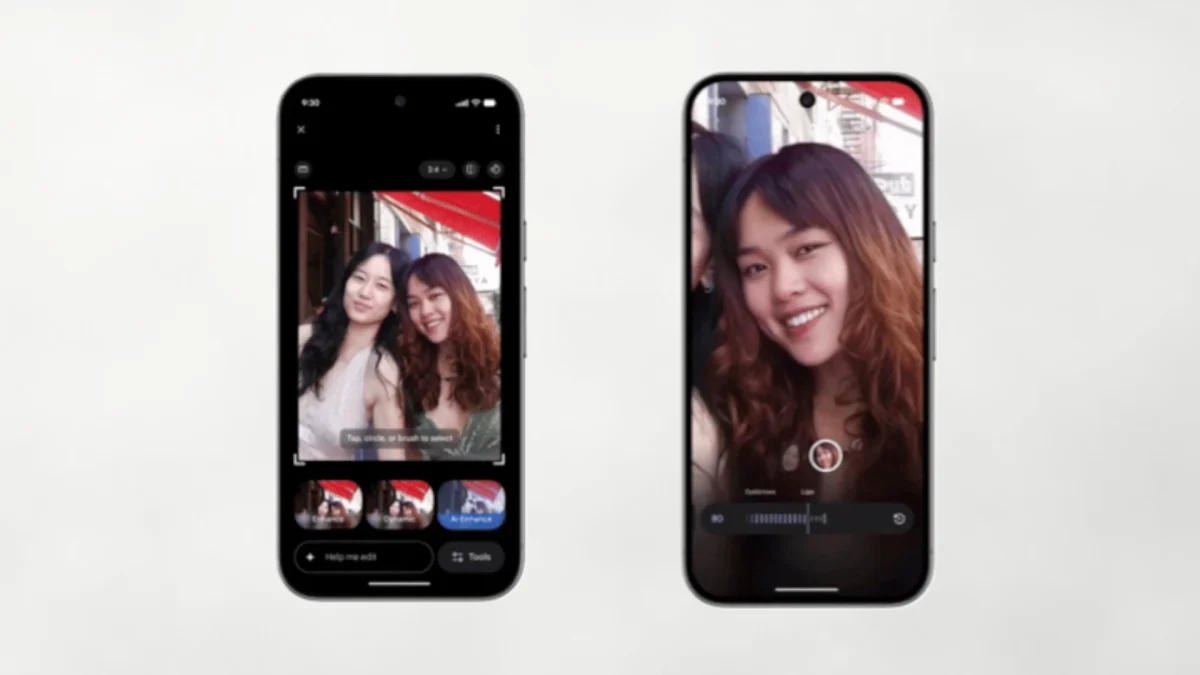

Google Photos just added a set of facial retouching tools to your image editor on Android. The novelty allows you to eliminate imperfections, refine skin texture, brighten eyes and whiten teeth. To use them, just select a face in the photo and choose from the available options: heal, smooth, under eyes, irises, teeth, eyebrows and lips. Each effect includes an intensity slider so the user can adjust the result to their liking.
Google insists that the objective is to offer changes “subtle”although that will depend on how far the user takes the slider. The company justifies the feature by saying that your photos should “capture how you feel in the moment”, something that may sound good in a press release, but in practice opens the door to systematically retouching reality. It is not a new criticism: the debate about beauty filters integrated into everyday apps has been on the table for years, and Google fuels it a little more with this.
Availability and technical requirements
The new tools are gradually arriving globally in the Google Photos app for Android, and require at least 4 GB of RAM and Android 9.0 or higher. The fact that they work on such basic devices suggests that much of the processing is done in the cloud, not on the phone itself. This maintains compatibility with older terminals, but also involves sending biometric data – facial features – to Google servers, something that not everyone will take into account when using the function.
At the moment there is no confirmation of when it will arrive on iOS. What is clear is that Google seeks to ensure that users do not have to leave the app for these types of edits, preventing them from resorting to third-party tools. The strategy makes sense: since it arrived Magic Eraser to Google Photos—first exclusive to Pixel and then extended to Google One subscribers—the app has been expanding its AI editing arsenal for years to become a complete solution. These new facial tools are another step in that direction, although also a sign that the line between photo and retouching is becoming increasingly blurred.
Do you think that this type of automatic retouching integrated into the mobile gallery normalizes an unreal image of ourselves, or are they simply another tool like any Instagram filter?