


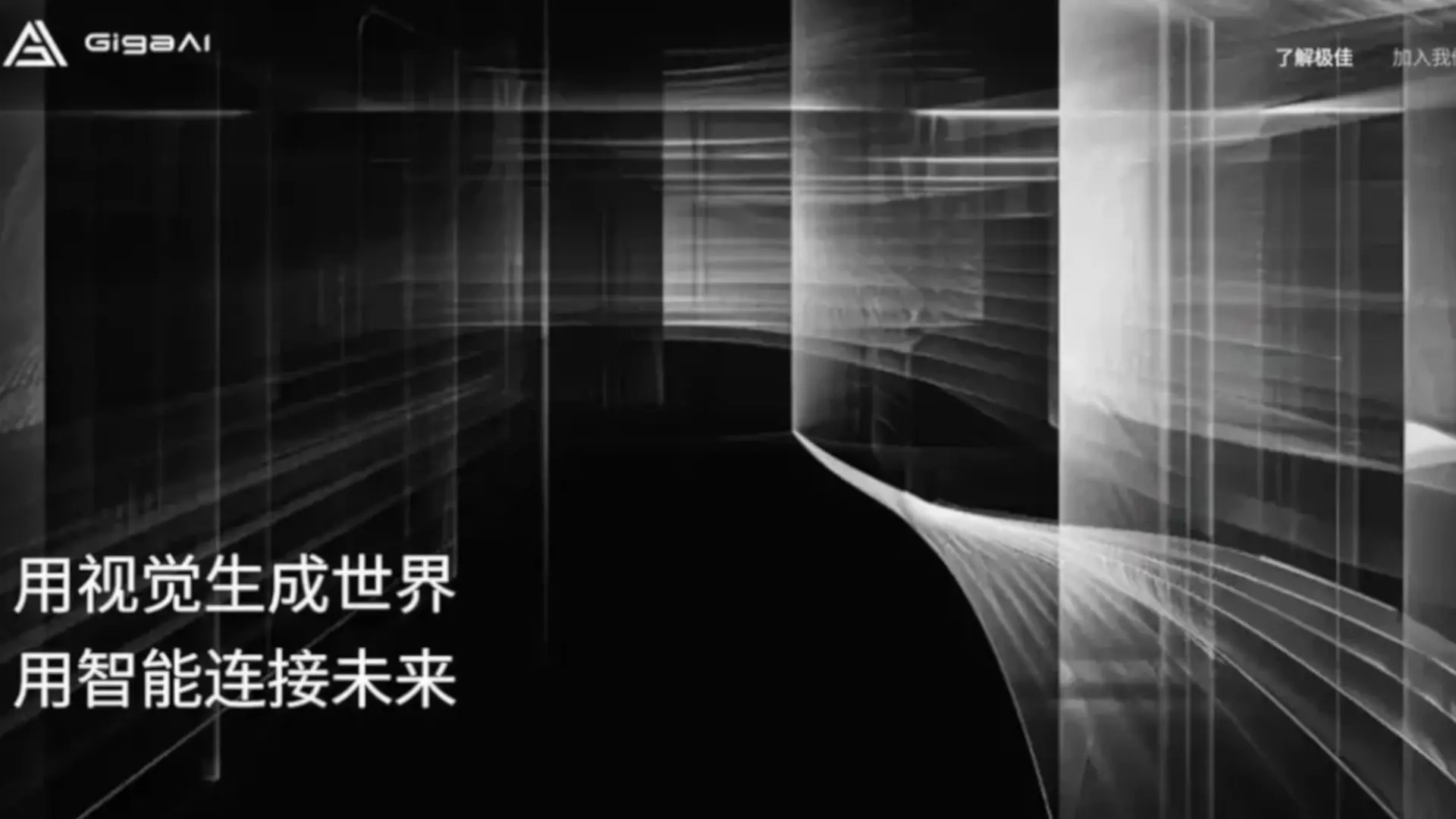

Huawei has taken an important step in Physical AI (artificial intelligence applied to the real world) when investing, through Huawei Haboin GigaAIa young Chinese company focused on world models. The company has just closed a Series A1 financing round of around one hundred million yuan (around 13 million euros at the exchange rate), just two months after its subsidiary GigaVision closed several pre-A rounds. Huawei makes it clear that it wants to lead the next generation of robots and autonomous vehicles.
GigaAI presents itself as the first Chinese startup dedicated exclusively to the research of world models for physical AI. Its goal is to build general intelligence systems capable of understanding and predicting how the environment works, so that a robot, a car or any physical agent can move, make decisions and learn with less testing in the field. If successful, it would allow not only greater autonomy, but also a lower error rate in unknown situations.
What is GigaAI and what does it bring to the real world?
Founded in 2023, GigaAI develops a complete software and hardware stack designed for robotics and autonomous driving. Its ecosystem includes the platform GigaWorld (oriented towards conduction and embodied systems), the fundamental model GigaBrain and the general Maker ontology: a knowledge layer that allows different robots or agents to share a common representation of the physical environment. All of this seeks to accelerate the deployment of complex solutions without depending so much on slow and expensive tests with real vehicles or robots.
The key is world models: instead of learning solely with real data, GigaAI creates a highly realistic simulated environment where the system can practice millions of times before touch a car or a robotic arm. That helps alleviate two big problems in modern robotics: the lack of quality data and the gap between simulation and reality. Expressed this way it may seem simple, although in reality it is extremely complex.
Huawei's strategy: from VLA models to WA action
. @Huawei is diving into physical AI — its VC arm just invested in @GigaAI a pioneer building world models for embodied intelligence. 🌍💡 #Huawei #AI #ChinaTechhttps://t.co/abVcib54DI
— Pandaily (@thePandaily) November 13, 2025
This move fits with Huawei's strategic shift toward calling World Action (WA)compared to Vision-Language-Action approaches (VLAvision-language-action models) that rely heavily on large language models. Instead of translating everything the camera sees into internal “words” and then deciding, the idea of WA is that the system directly receives vision, sound or force signals and goes almost from sensor to movement, relying on very precise world models.
Managers such as Jin Yuzhi, head of Huawei's Intelligent Automotive Solutions Business Unit, the connected car business unit (BU)have already pointed out that this route may be more difficult at first, but more suitable for achieving truly autonomous driving. If GigaAI achieves robust world models, Huawei can integrate them into its advanced driving assistance platforms and, in the medium term, into autonomous driving solutions that compete with what companies like Tesla or XPeng are doing.
What can change for robots, vehicles and users
For the average user, all this translates into very concrete promises: vehicles with safer assistance systems, capable of better anticipating curves, distracted pedestrians or sections under construction, and service robots that they not only follow scripts, but also better understand the house, factory or warehouse where they work. China is already betting big on humanoid robots and industrial robotics, and this type of physical AI may be the glue they were missing.
In Huawei's ecosystem, the commitment to GigaAI can also strengthen its position against global rivals: the same experience in world models that powers a car could end up being adapted to home robots, smart warehouses or even connected consumer products with HarmonyOS. When it will be translated into commercial products remains to be seen, but the direction is already set. This bet will have to be followed closely. Huawei for physical AIwhich could set the course for the next generation of robots and autonomous vehicles.