



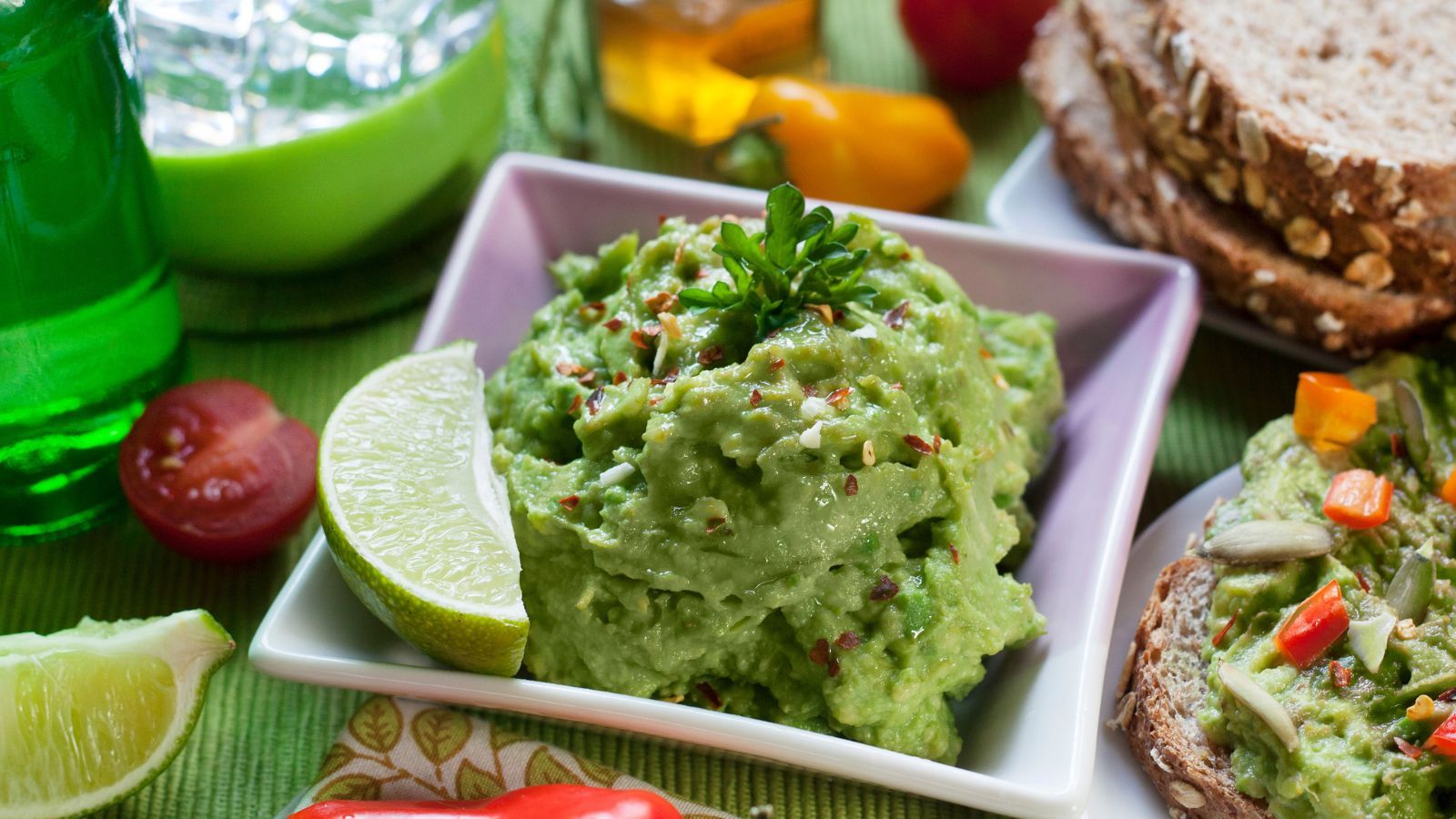

The Organization of Consumers and Users (OCU) has warned of the important differences that exist between refrigerated guacamoles and the guacamole sauces sold in Spanish supermarkets. According to the information published on November 25some of these sauces contain only 4% avocado, while the refrigerated guacamoles analyzed by the organization incorporate at least 88% of this fruit.
Although both products have a similar appearance and are usually used to accompany appetizers, their composition can be very different. The green color of the preparation or the images of avocados that appear on the packaging do not allow us to determine on their own the amount of fruit it contains.
OCU finds guacamole sauces with very little avocado
The sauces analyzed by the organization present percentages of avocado that range between 4% and 17%. A proportion considerably lower than what a consumer who buys this product with traditional guacamole in mind can expect.
Much of its composition corresponds to water and vegetable oils, to which other ingredients are added to obtain the desired texture, flavor and appearance.
The OCU considers that the sauces examined have an undesirable nutritional profile and advises against regularly using them as a substitute for guacamole.
To know the real characteristics of the product, it is not enough to look at its commercial name. The most useful information is found in the list of ingredients on the label.
The ingredients are presented, in general, in descending order according to their weight at the time of preparing the food. Therefore, it is interesting to check what position the avocado occupies and what percentage it represents.
Chilled guacamole contains much more avocado
The alternative that highlights the OCU It is the guacamole sold in the refrigerated sections of supermarkets.
Products in this category examined by the organization contain a minimum of 88% avocado. Some incorporate small amounts of onion, tomato, cilantro and other common ingredients in the preparation of this recipe.
Avocado provides fiber and mainly monounsaturated fats. It is a food that can be part of a balanced diet, although it also has a higher energy density than many other fruits.
The fact that a preparation contains a high proportion of avocado does not mean that all products are nutritionally identical.
The amount of salt added, the complementary ingredients and the size of the portions consumed are aspects that should be kept in mind when comparing two apparently similar packages.
OCU recommends paying special attention to the salt content
One of the elements that the organization advises to review is the amount of salt present in the prepared guacamoles.
The OCU recommends avoiding those products in which this ingredient exceeds 1% of its composition, which is equivalent to more than one gram of salt per 100 grams of product.
The nutritional table on the packaging allows this comparison to be made directly, regardless of the size of the tub.
The food with which the guacamole is accompanied also matters. Although it is usually served with nachos and other appetizers, there are alternatives such as carrot, cucumber or celery sticks that allow you to incorporate vegetables into the meal.
Another possibility is to prepare guacamole at home, personally controlling the amount of salt and adapting the ingredients to the preferences of each consumer.
White brands can also offer good guacamole
Price is not necessarily a reliable indicator of the nutritional quality of these products. The OCU Remember that there may be important differences between the leading brands and the supermarkets’ own brands, without the latter having to be worse.
When comparing two alternatives, it is more useful to check the percentage of avocado, the amount of salt and the price per kilogram than to simply check how much each container costs.
The organization also has the OCU Market application, which allows you to consult nutritional information and compare products by reading their barcodes.
In this way, consumers can check the characteristics of a guacamole before adding it to the shopping cart, without depending exclusively on the manufacturer’s advertising messages.