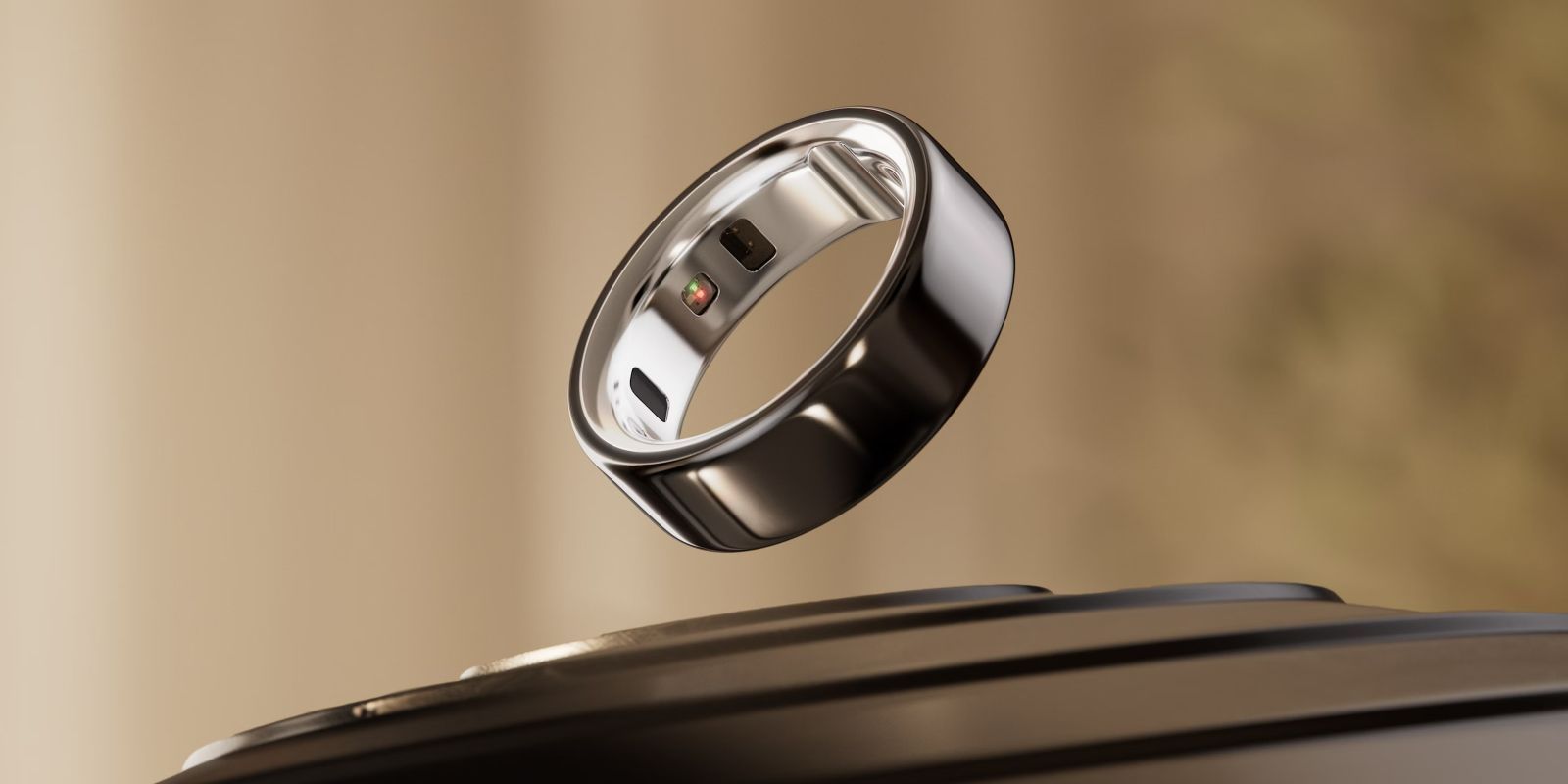



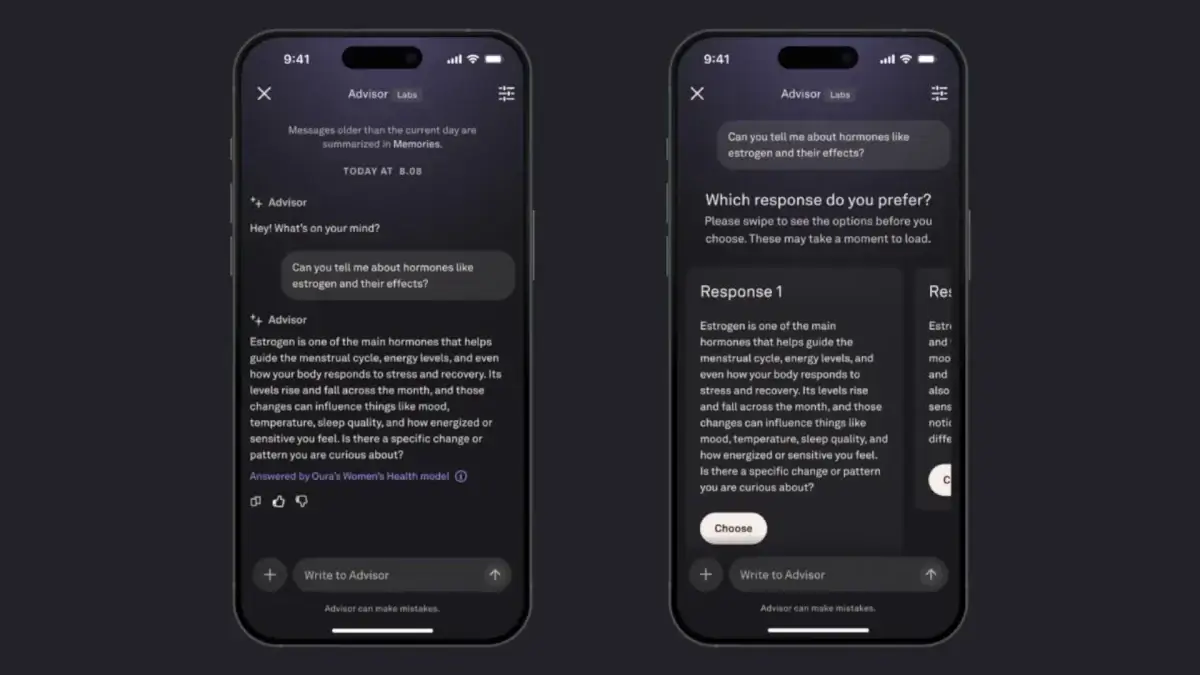

Oura has just presented its first internally developed artificial intelligence model, and has dedicated it entirely to women's health. It comes integrated into Oura Advisorthe app's AI assistant, within Oura Labs, the experimental section of the platform. The difference compared to previous versions is relevant: until now, Advisor worked on generic AI systems. This new model has been built from the ground up with specific clinical research on women's health.
In practice, the system crosses the data collected by the ring—sleep, menstrual cycle, activity, stress, signs of pregnancy—with that clinical knowledge to offer personalized guidance according to the context of each user. Oura presents it as a conversational tool, not as a medical serviceand ensures that the responses are designed to be “supportive and not condescending.” On paper it sounds good. We will have to see how that translates into day-to-day life.
What's behind the commitment to women's health?
Women's health has become one of the most disputed areas of the wearables market. Menstrual cycle, fertility, menopause… These are areas where biometric data can provide real value, but also where misinterpretation has more delicate consequences than in other contexts. Faced with that, the fact that Oura has chosen to build its own model for this area instead of adapting a general-purpose chatbot is, at the very least, a coherent bet.
That being said, the limits remain the same. A clinically based model is not a diagnostic tool, and Oura does not present it as such. Regarding privacy – another sensitive point here – the company states that the model runs on its own infrastructurethat conversations are not sold or shared with third parties and that they are not used to train public models. Participation in Oura Labs is voluntary.
If this trend takes hold, the real challenge for wearables will no longer be how much data they collect but will become what they do with it. The question is whether an AI integrated into the ring can play a real role in the female health trackingor if it will always remain as a useful but secondary complement to the consultation with a specialist.
All of this comes at a time when Oura is not only fighting for leadership in office, but also in court. The Finnish company filed a complaint with the US International Trade Commission (ITC) against him Samsung Galaxy Ring by infringe patents related to ring design, internal arrangement of sensors and manufacturing methods. If Oura wins, the import ban of the Galaxy Ring in the United States. The message is clear: either license or litigation.