


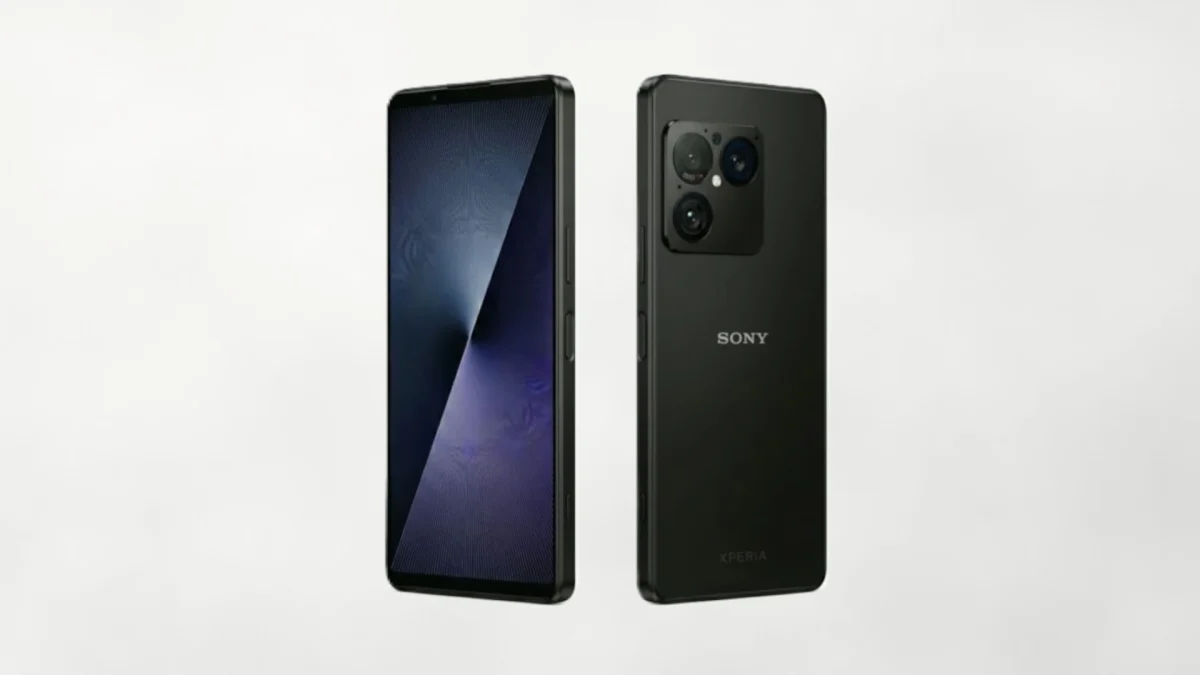

The leaks of the Sony Xperia 1 VIII They become clearer, and the message is as revealing as it is disappointing for those who expected a profound renewal. A set of detailed renders has appeared online, giving an early look at what Sony could be preparing ahead of a possible May launch. What they show is unequivocal: the vertical strip of cameras that has defined the series' identity since 2019 disappears. Instead, a square module more conventional, in the style of what brands like Xiaomi or OnePlus have been doing for years.
The reactions are mixed. Some users are convinced by the larger module; others feel that the Xperia's classic identity is diluted. It is not a far-fetched perception: for years, Sony boasted of going against the grain. Give up on that differentiating seal To adopt a generic design language is not exactly a bold statement.
What Sony does maintain (and what it could improve in cameras)
At the beginning of the month Leaked images of the terminal had already circulatedalthough less sharp and with a somewhat different design, closer to that of the OnePlus 10 Pro. Now, with these new clearer renders, it is confirmed that the big change is essentially limited to the relocation and shape of the camera module. The rest of the phone remains recognizably Xperia: the 3.5mm jack and the microSD slot They remain, two characteristics that are increasingly rare in the high range.
As for the cameras, the Xperia 1 VIII points to a system 48 MP tripleincluding the telephoto lens, which in the previous model remained at 12 MP. The telephoto lens would have a larger sensor than the Xperia 1 VII, which would justify the redesign of the module. If Sony takes advantage of this hardware leap to truly improve image processing – one of its weakest flanks compared to Google or Apple – the change in form will have been worth it. If not, you will have sacrificed your most recognizable face without getting anything in return.
The launch is expected May or June 2026. Is it worth it for Sony to abandon its most unique design to look like just another ordinary Android, or should it have opted to also differentiate itself visually?