


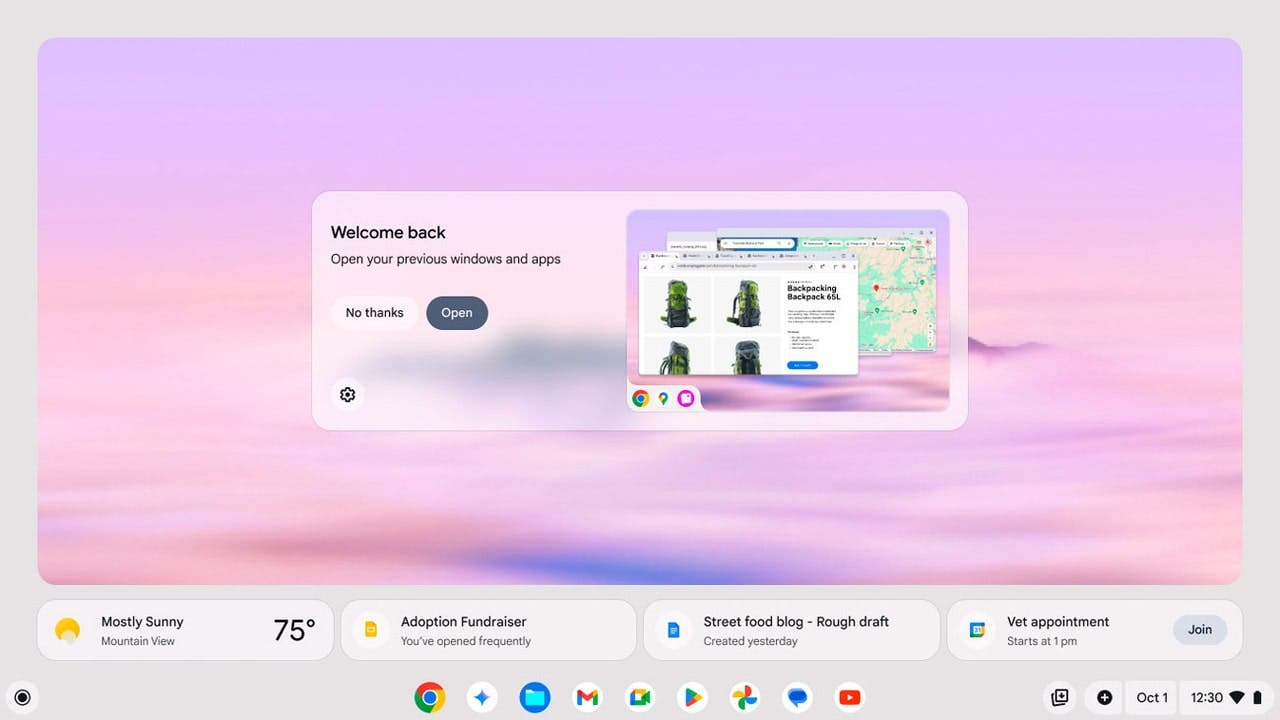

Google has confirmed that Chromeos and Android HE They will combine on a single platform Oriented to laptops and large screens. The movement, advanced in the Snapdragon Summit, seeks to carry Gemini and the Android's Stack to the desk, with the promise of superior performance, more agile updates and a more consistent experience between the mobile and the computer.
Beyond the headline, the key is in the technical base: Google will rebuild chromeos on the technological basis of Androidwith the aim of eliminating redundancies and directly take advantage of the Ecosystem of apps and services. If everything goes as planned, the first devices will arrive next year And 2026 will be the year in which we begin to see laptops with Android designed for productivity and generative AI on large screens.
A unified base to enhance AI and improve the integration of applications
Google's turn is not a simple brand change. When unifying foundations, the company wants Android apps function natively In large format equipment, reducing compatibility layers and improving performance. This will allow to integrate Gemini more deeply into tasks such as writing, summary, images or contextual assistance directly from the system, without resorting to web or third -party solutions.
In addition, Android alignment facilitates iterate faster: security patches, compatibility improvements and new APIs can arrive with less friction. For the user, this translates into better response timesa more complete multitasking experience and continuity functions Mobile -portile (clipboard, calls, notifications and shared apps) with fewer barriers. In parallel, manufacturers obtain a unified platform on which to display their equipment, with special focus on laptops with ARM processors and in the performance per watt necessary for the local AI.
What changes for users, manufacturers and developers
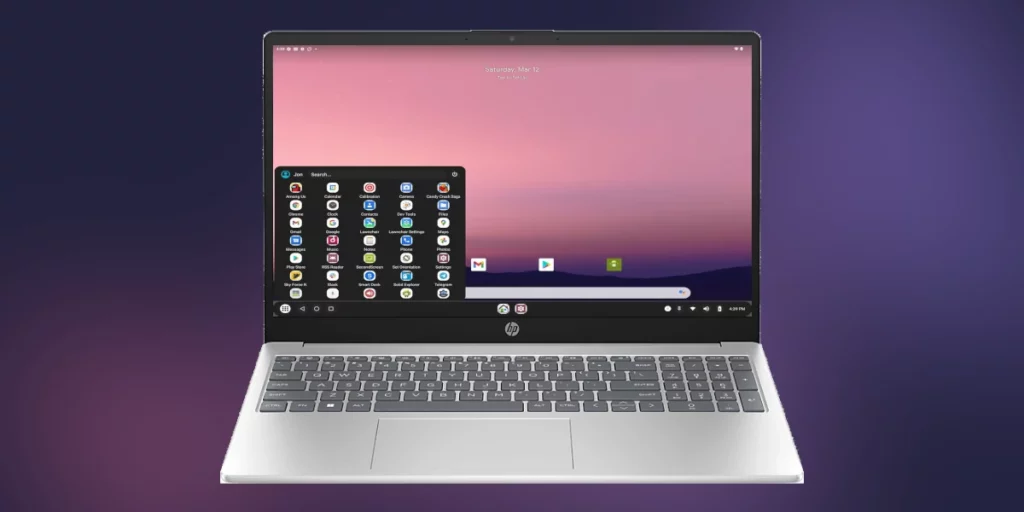
For those who already live in Android, the step promises a soft landing: my applications, accounts and services will be available in the laptop without having to learn another system. Compatibility with Large screen and with Mouse input and keyboard It will be a priority, something that Google has been refining on tablets for years and now moves to the desk. In parallel, we will see more functions of Android in desktop mode: Redeemable windows, shortcuts and a desktop environment designed for productivity.
On the hardware side, Google is narrowing ties with silicon partners to ensure that the acceleration of AI (NPU/TPU) Be the protagonist. This will allow Gemini, together with the transcription, transcription and content creation capabilities, work without connection or with less latency, and that apps can take advantage of that power with new API. For developers, promise is a single technological base and a Set of tools Familiar (Android Studio, Jetpack, material) to optimize their apps for the desk without breaking what they already have on the mobile.
Open questions and road map
Although the message points to a clear future, reasonable questions are left: what will happen to the Chromebook current, how will the process of update and what degree of compatibility We will see between generations. Google has suggested that the approach is evolutionary: Chromeos as experience is maintained, but executing About Android to win in development speed and access to APIs.
As for dates, the official message speaks of First releases next year and a broader deployment in 2026. That is, we will see a phase transition in which manufacturers and developers will adapt equipment and app. If Google is right with execution, 2026 may be the year in which Android makes the final leap to the portable format With a solid proposal to compete with Windows and macOS.
A desktop android to really compete
The decision Google strategic is consistent: Chromeos triumphed in education and cloud, but Android is where the bulk of apps and innovation lives in Ia from Google. Unifying both worlds can offer Android users a portable that “lace” from minute oneto the manufacturers a simpler and more, to the ecosystem, a route for the Generative He feels native on the big screen. Success will depend on execution.
Do you think this union arrives in time to stand up to Windows and Macos? What do you expect from a Android laptop thought for productivity and?