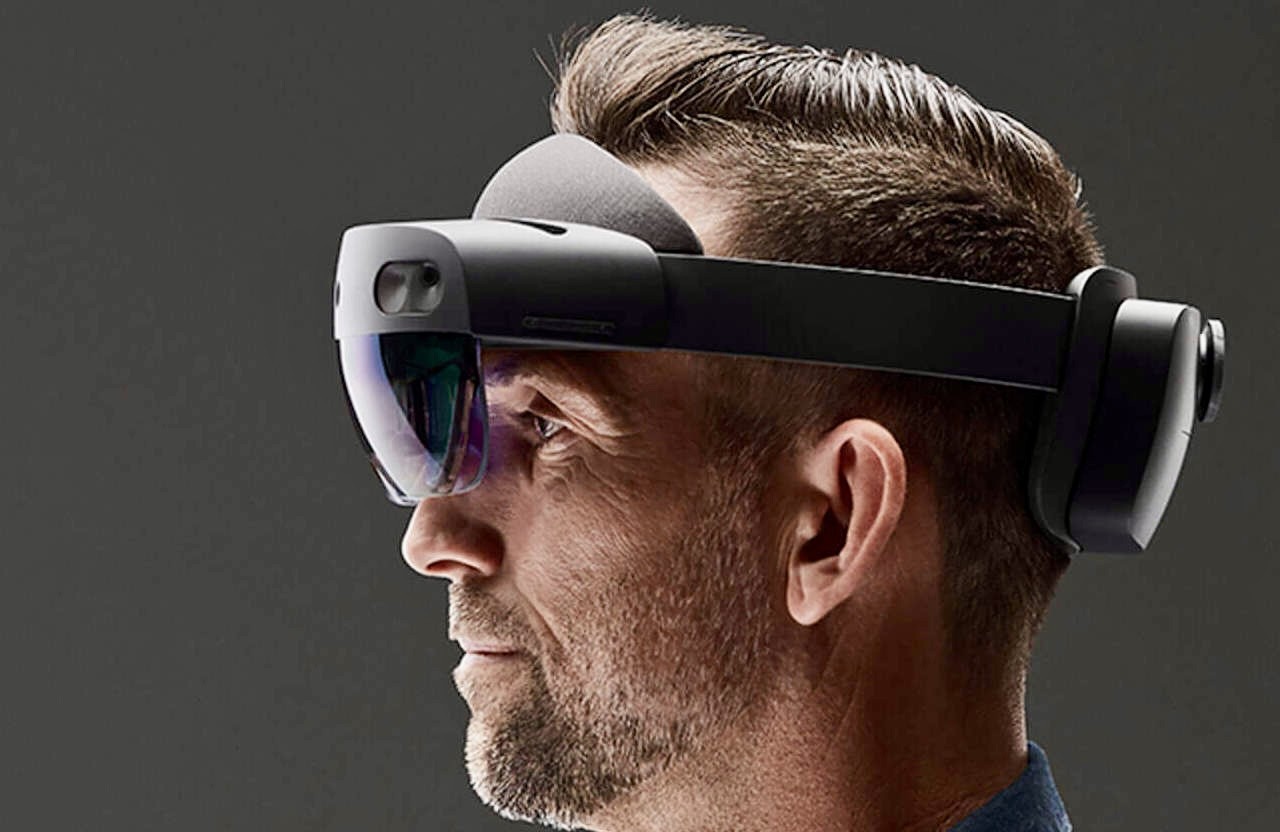
Valve has finally made official the Steam Framea stand-alone virtual reality (VR) viewer that relies on Steam OS 3 and on a chip Snapdragon 8 Gen 3 to bring your Steam library to a lightweight, wire-free headset. The idea is clear: offer games both locally and by wireless streaming from the PC, with a “streaming-first” approach that wants to surpass the veteran Valve Index in functionality and comfort.
Beyond the headline, Valve's move matters because it combines everything learned with the Index and the Steam Deck into a single device. The Steam Frame promises to be comfortable, much lighter than most of its rivals and with enough mobile power for adapted games, but leaving the weight of the most demanding titles on the PC. On paper, it sounds great, but it also opens up a lot of questions about price, autonomy, and an optimized catalog.
Lightweight, modular design for hours of gaming
In terms of design, the Steam Frame opts for a very compact front body: the main module weighs about 185 gramswhile the complete set with strap, padding, speakers and rear battery remains in 440 grams. It is a striking figure for a complete autonomous headset, and Valve highlights that the textile strap is foldable to facilitate storage or to allow you to rest your head without discomfort caused by rigid parts.
The battery, 21.6Whis integrated into the back of the strap and helps balance the weight, while the audio comes through speakers integrated into the headband. Furthermore, the design is modular: Valve will share files and specifications so that third parties can create custom straps, facials and accessories, something that opens the door to more rigid visors, ultralight versions or even additional modules with cameras for external tracking.
2K screens per eye, Snapdragon 8 Gen 3 and greater power

On a visual level, Valve's new viewer mounts two screens 2160 x 2160 pixels per eye LCDwhich amounts to “2K” per eye, with plenty of pixel density. The Pancake lenses promise good sharpness in most of the field of view and fewer distortions, with a field of view of about 110 degrees and refresh rates between 72 and 120 hertz, in addition, it has an experimental mode that reaches 144 hertz for those who prioritize fluidity.
The physical adjustment of the interpupillary distance using an upper wheel allows each user to better align the lenses with their eyes, something key if you do not want to lose clarity or end up with visual fatigue. Added to this are two internal chambers to eye tracking and techniques like foveated streaming, which prioritizes image quality right where you look to save bandwidth and power, especially when streaming from your PC.
Under the hood, the protagonist is the Qualcomm Snapdragon 8 Gen 3 accompanied by 16GB LPDDR5X RAM and 256 GB or 1 TB storage, expandable with microSD cards. It is a clear jump compared to the Meta Quest 3 chip, which is designed to move demanding mobile games and VR experiences locally, but without deception: the heaviest PC titles will continue to depend on streaming. Valve promises that almost the entire Steam catalog will be able to run thanks to SteamOS and a compatibility layer like Proton, with the “Steam Frame Verified” label to indicate how well each game works.
Wireless streaming and new Valve ecosystem
The differentiating point of the Steam Frame is in the wireless streaming. The headset integrates Wi-Fi 7 connectivity (next-generation wireless network) and is accompanied by a dedicated USB adapter that creates a direct link in the 6 gigahertz band between your PC and the helmet. The idea is that you can play Half-Life: Alyx or any non-VR (flat) game in your library as if the headset were connected by cable, but without the cable dangling.
In addition to the direct link, the headset connects to your home network like any other device, allowing it to download games, update and use applications without always depending on the PC. Valve is also pushing a cinema mode to enjoy games or 2D content on a large virtual screen while sitting in the living room.
The Steam Frame Controllers They maintain a familiar design for those who come from other helmets: A/B/X/Y buttons, analog sticks with TMR (tunnel magnetoresistance) technology to avoid the dreaded “drift”, triggers, grip and capacitive sensors to detect the position of the fingers. Each controller uses a AA battery and promises about 40 hours of autonomy, with optional “Knuckles” straps to hold them in your hand. Along with the viewer, there is also the new Steam Machine desktop and a renewed Steam Controllerwith which Valve wants to create a well-integrated and coordinated range of devices.
A very serious rival for Meta, Apple and Samsung if the price is right
With all this set of specifications, the Steam Frame looks like one of the most interesting viewers for those who already have a gaming PC and want to make the leap to virtual reality without cables and without depending only on a mobile catalog. It's lightweight, has good screens, a powerful chip, and a focus on streaming that fits well with the huge steam libraryalthough its real autonomy and the degree of maturity of the software still remain to be verified.
What Valve has not yet confirmed is the price. Beyond pointing out that it will be below the complete Valve Index kit, which was around 1,000 dollarsbets place it in a similar range or slightly higher than Meta Quest 3, although it is not clear if it is on par with the Apple Vision Pro or the Galaxy XR. Its launch is scheduled for early 2026 in the same markets where the Steam Deck is sold, so Spain should be on the list. And you, would you consider waiting for the Steam Frame before buying a Meta Quest 3, or do you already know how you want to enter virtual reality?